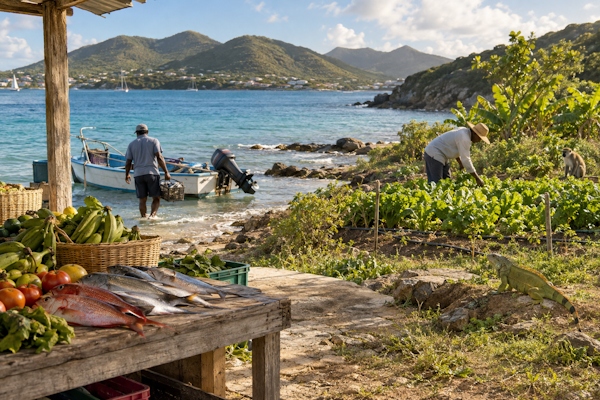
SMN NEWS SPECIAL REPORT: Fighting the Cost of Food: Why Saint Martin must put fishers and farmers at the center of its response.

fishfarming20092026MARIGOT:---  As France confronts anger over fuel prices and the cost of living, Saint Martin has an urgent question of its own:  what is being done to help the island produce more of the food its people eat?

French fishermen have blocked ports over soaring fuel costs. Workers in other sectors have protested over pay and purchasing power. President Emmanuel Macron has urged the French public to “remain united” and acknowledged the strain on families, while Prime Minister Sébastien Lecornu’s government prepares a 2027 budget containing a proposed €54 billion in savings.

On Saint Martin, a debate about purchasing power cannot stop at fuel subsidies or the price of imported goods. It must also address whether local fishers can supply more fish at a viable cost, whether farmers can keep the crops they grow, and why residents still have no clear timetable for controlling invasive animals that threaten food production.

The sea: protection and access

The national Nature Reserve of Saint Martin was created in 1998 to protect marine and coastal ecosystems in the island’s northeast. Its founding decree prohibits line, net, and trap fishing, spearfishing, and the collection of marine animals within the reserve’s maritime boundary. It does not ban fishing throughout French Saint Martin. Among the areas excluded from the reserve boundary are the interiors of Cul-de-Sac Bay and Orient Bay; other fishing rules may still apply there.  Founding decree, reserve boundary information

Protecting reefs and breeding habitats helps sustain fish stocks. At the same time, restrictions on nearby fishing grounds raise serious questions for people trying to earn a living from the sea. How much farther must affected fishers travel? What do those trips cost in fuel? Does limited access reduce the amount of affordable local fish reaching Saint Martin’s tables?

SMN News found no published assessment in the material reviewed that quantifies those costs. The absence of that evidence should prompt the Prefecture, the Collectivité and reserve managers to gather it with fishers.

One proposal deserves a formal answer: could carefully controlled seasonal fishing be permitted in a limited part of the reserve? Fishers should be able to identify the grounds and species at issue. Scientists should assess whether any opening could avoid damage to vulnerable habitats and breeding stocks. Authorities should then publish their conclusion.

There is a legal hurdle. The fishing prohibition is contained in the decree that established the reserve. A local permit cannot simply override it; authorities would need to establish the lawful route for any change. They should also examine how to improve access and support for fishing grounds outside the reserve. 

Fish do not observe the island’s political borders. At an Anguilla Bank fisheries conference, fishers, scientists and officials from Saint Martin, Sint Maarten and neighboring islands discussed shared stocks and the need for coordinated management. That work offers a starting point for policies that protect fish while keeping fishing communities viable. Saint Martin Nature Reserve fisheries conference report

The land: who protects the harvest?

Farmers and residents face another obstacle: invasive monkeys. The French-side Nature Reserve says the animals have spread across Saint Martin and affect crops, residents and biodiversity. French and Dutch-side representatives discussed a coordinated response, but the reserve’s published account said the proposed French-side project was still being evaluated for its methods and cost. Saint Martin Nature Reserve

The Dutch side has taken action. The Sint Maarten Nature Foundation reported that veterinarians captured and euthanized 108 monkeys between January and November 2023. The government’s stated objective at the time was to remove 450 by 2025. That was a target, not a verified final total. The Foundation said its programme was expected to end in 2026 and that its impact and longer-term options would then be assessed. Nature Reserve report, Nature Foundation statement

The Sint Maarten Nature Foundation also lists green iguanas among the species covered by its invasive-species project. Its published description does not provide an iguana population count, a removal target or a completion date. Any control effort must distinguish the invasive green iguana from the endangered Lesser Antillean iguana. Nature Foundation project, Lesser Antillean iguana action plan

When exactly will the government remove the monkeys and invasive green iguanas affecting farming? The sources reviewed do not establish a current islandwide removal total or a verified timetable. Residents and farmers deserve that information from both governments.

The financial stakes are immediate. SMN News’s review of Sint Maarten’s draft 2027 budget found agriculture-related allocations and a proposed microloan programme, but no clear, species-specific 2027 timetable for monkey or iguana control. Asking people to borrow money to grow food while leaving crop losses insufficiently addressed is a poor foundation for food security.

A cost-of-food plan needs dates and answers

The governments on both sides of the island should publish a practical programme that residents can measure. It should establish the cost of restricted fishing access, decide whether a lawful and scientifically sound seasonal opening is possible, and state what support fishers can receive in permitted waters. It should also measure crop losses and set out who will control invasive animals, how the work will be funded, and when results will be reported.

None of those steps guarantees that grocery prices will fall. Authorities must measure whether increased local supply reaches consumers at prices they can afford. But without those steps, “produce more food locally” remains a slogan while fishers face fuel bills and farmers face damaged harvests.

Calls for an October 17 Yellow Vests protest are circulating in mainland France, but the date has not been established as a coordinated national action, and SMN News has found no confirmed Saint Martin strike tied to it. 

Saint Martin does not need to wait for October 17 to act.  The Prefecture, the Collectivité and the Government of Sint Maarten can begin by putting fishers and farmers in the room, publishing the evidence, and giving the public a timetable. Families fighting the cost of food need to know what will change—and when.
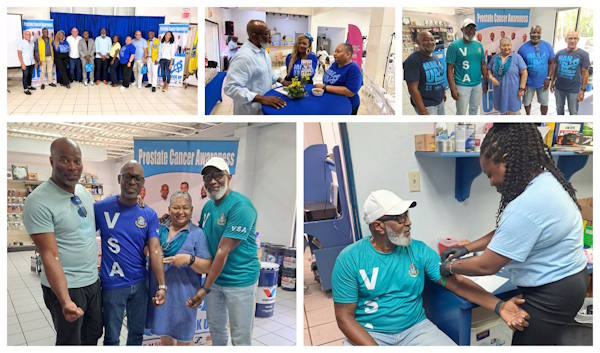

Minister Connor Leads by Example in Prostate Cancer Awareness Activities.

prostatecancer20092026PHILIPSBURG:--- Minister of Public Health, Social Development and Labor Claret Connor spent Saturday, September 19, 2026, focused on men's health, participating in two key prostate cancer awareness initiatives to encourage men in Sint Maarten to take greater responsibility for their health.

The Minister, accompanied by the two male members of his Cabinet, joined the ongoing “Man UP, Check UP” prostate cancer awareness campaign earlier in the day, participating in PSA testing at NAPA Auto Parts on A. Th. Illidge Road.

The campaign encourages men to take a proactive approach to their health through early detection, education and regular health checks.

Leading by Example

Minister Connor said that participating in the screening was about more than simply lending support to the campaign.

“As leaders, we have to be willing to lead by example. We cannot encourage our men to take care of their health if we are not prepared to do the same ourselves.”

The Minister said he was particularly encouraged by what he witnessed at the screening location.

He was pleased to see men from all walks of life standing in line to take advantage of the opportunity to get tested, demonstrating that men's health is a concern that crosses age, profession, background and social circumstances.

The Minister later learned that more than 500 men had already been tested as part of the campaign, a development he described as encouraging and an indication of the importance of continuing to make health screening accessible and visible within the community.

“Seeing so many men come out and take that step is exactly what initiatives like Man UP, Check UP are about,” Minister Connor said. “We have to remove the idea that going for a health check is a sign of weakness. It is the opposite. Taking responsibility for your health is strength.”

More Opportunities to Get Screened

Minister Connor emphasized that the opportunity for men to take action does not end with Saturday's screening.

Additional PSA screenings will take place on Friday, September 25, at St. Maarten Medical Center (SMMC).

The Minister is encouraging men who have not yet taken advantage of the screening opportunities to make use of this opportunity and take a proactive step toward their health.

“I encourage our men not to wait and not to assume that because they feel healthy, they do not need to get checked,” Minister Connor said. “If you have not yet taken advantage of the screening opportunities, look out for the upcoming dates and make the time to get checked.”

He also encouraged men to look out for additional screening dates and other prostate cancer awareness activities throughout the remainder of September, noting that Prostate Cancer Awareness Month will continue to feature activities focused on education, prevention, early detection and men's health.

“This month is full of opportunities for our men to learn, ask questions and take action,” the Minister said. “I encourage every man to look out for the upcoming activities and find an opportunity that works for you. Man UP. Check UP.”

From Screening to Conversation

The Minister's day continued that evening with his participation in “Let’s Talk About Sex 4 – Prostate Cancer Awareness,” a Men's Night Out organized by the ELEKTRAlytes Foundation and Positive Foundation.

The event brought men together in an informal setting for conversation, education, and fellowship around prostate cancer and men's health.

Addressing those gathered, Minister Connor thanked ELEKTRAlytes and the Positive Foundation for continuing to create opportunities for men to engage in open conversations about their health.

“Tonight is Men's Night Out,” the Minister said. “We are going to hang out, learn, and mingle, but most importantly, we are going to be amongst each other. Sometimes simply having the opportunity to sit down with other men and talk openly can make all the difference.”

He encouraged men not to wait until they experience symptoms before paying attention to their health.

“Man UP. Check UP. Take care of yourself.”

Health Professionals and Community Partners Recognized

Minister Connor expressed his appreciation to the professionals who participated in the prostate cancer awareness panel:

Dr. Diego Ramos, Urologist, St. Maarten Medical Center

Dr. Carlos Rojas, Urologist, St. Maarten Medical Center

Karen Eusebius, Dietitian

Solens Dornezon, Health and Fitness Coach

He also recognized the contribution of the hardworking staff of the Collective Prevention Service (CPS), noting the continued commitment of civil servants who work to bring public health initiatives into the community.

“Our civil servants continue to work behind the scenes and on the ground to push important public health initiatives and ensure that health awareness reaches our communities,” Minister Connor said. “Their work matters, and on behalf of the Ministry, I thank them.”

The Minister also thanked the Sint Maarten Lions Club for its continued community involvement and for making its clubhouse available for the Men's Night Out event.

A Shared Responsibility

Minister Connor emphasized that improving men's health cannot be the responsibility of government or healthcare professionals alone.

“Community organizations, healthcare professionals, government and residents all have a role to play in creating a healthier Sint Maarten,” he said.

The Minister encouraged men to continue the conversation beyond the campaign events and to encourage their fathers, brothers, sons, friends and colleagues to take their health seriously.

“Don't wait until there is a problem,” Minister Connor urged. “The goal is not simply to live longer. The goal is to be there — healthy, present and strong — for the people who depend on the people we love and us.”

The Ministry of Public Health, Social Development and Labor continues to support initiatives that promote prevention, early detection, health education and greater awareness of men's health issues.

Man UP. Check UP.

Minister of VSA Connor Emphasizes Early Detection, Prevention, and Support for Families in Observance of World Alzheimer’s Day.

claretconnor20092026PHILIPSBURG:---  The Minister of Public Health, Social Development and Labor (Minister VSA) Claret Connor said on Sunday that the world will be observing World Alzheimer's Day on September 21, 2026, under the international theme: "The Earlier You Know, The More You Can Do: A Dementia Diagnosis Matters."

This year's observance underscores a critical truth: early recognition and timely diagnosis of Alzheimer's disease can fundamentally improve outcomes, enabling individuals and families to access appropriate care, treatment options, and support services.

"Early detection saves lives and preserves quality of life," said Hon. Claret Connor, Minister of Public Health, Social Development and Labor. "By understanding the warning signs and taking action promptly, our citizens can access the medical support they need and make informed decisions about their future care. We are committed to ensuring that no one faces dementia alone."

Understanding the 10 Warning Signs of Alzheimer's Disease

While occasional forgetfulness is a normal part of aging, persistent memory loss and cognitive decline are not. Sint Maarten residents should watch for these warning signs:

Memory Loss Disrupting Daily Life – Forgetting recently learned information, important dates, or repeatedly asking the same questions; Challenges in Planning or Problem-Solving – Difficulty managing tasks with multiple steps, such as following recipes, paying bills, or managing finances;

Difficulty Completing Familiar Tasks – Struggling with routine activities like driving to familiar places or preparing meals; Confusion with Time or Place – Losing track of dates, seasons, or becoming disoriented in familiar locations; Problems with Visual Images and Spatial Relationships – Difficulty reading, judging distances, or determining color contrast; Trouble Finding Words or Following Conversations – Difficulty joining conversations, repeating oneself, or struggling to name familiar objects; Misplacing Things and Losing the Ability to Retrace Steps – Placing items in unusual locations and becoming unable to remember where they were left; Decreased or Poor Judgment – Making unusual financial decisions or neglecting personal hygiene; Withdrawal from Work or Social Activities – Isolating oneself due to difficulty keeping up with conversations or activities; Changes in Mood and Personality – Becoming confused, suspicious, depressed, anxious, or easily upset.

If you or a loved one experience these symptoms, consult a healthcare provider promptly for evaluation. Early diagnosis is essential. There is no single test for Alzheimer's disease; instead, physicians use a comprehensive diagnostic approach that includes a clinical evaluation comprising: Medical History Review; Physical and Neurological Examination; Cognitive and Functional Testing; Laboratory and Advanced Testing.

Research shows that up to 45% of dementia cases may be delayed or prevented through lifestyle modifications and proper health management. Sint Maarten residents can take the following steps to protect their brain health by improving their physical and cardiovascular Health:

Engage in at least 150 minutes of moderate-intensity physical activity per week (walking, swimming, dancing, sports); maintain healthy blood pressure through diet and medication if needed; manage diabetes and maintain healthy cholesterol levels; maintain a healthy body weight; quit smoking and limit alcohol consumption.

Pursue lifelong learning—read, take classes, learn new skills; Stay socially connected—maintain relationships with family and friends; Engage in mentally stimulating activities (puzzles, games, creative hobbies); Volunteer and participate in community activities.

Address hearing loss through hearing aids if needed; Correct vision problems (cataract surgery, corrective lenses); Ensure adequate sleep (7–8 hours per night); Reduce exposure to air pollution

Prevent head injuries (use seatbelts, helmets, fall prevention in the home).

Regarding mental health and nutrition: Treat depression and anxiety with professional help

Follow a healthy diet (Mediterranean or MIND diet recommended—emphasizing fruits, vegetables, whole grains, and healthy fats); Manage stress through relaxation techniques and social support

“While these measures significantly reduce dementia risk, no single intervention guarantees prevention. A holistic approach to healthy aging is most effective,” said Minister of VSA Hon Claret Connor.

The Minister of Public Health, Social Development and Labor encourages all Sint Maarten residents to: Learn the warning signs and discuss concerns with family members; Schedule a health evaluation with their primary care physician or geriatrician if symptoms are present; Engage in brain-healthy lifestyle practices beginning now; Support family members and caregivers affected by dementia

Reduce stigma by speaking openly about Alzheimer's disease and cognitive health.

"This World Alzheimer's Day, we commit to supporting our citizens—both those living with dementia and their caregivers—with compassion, resources, and access to quality care," Minister Connor stated. "Together, we can make a difference in the lives of our families and community."

Subcategories