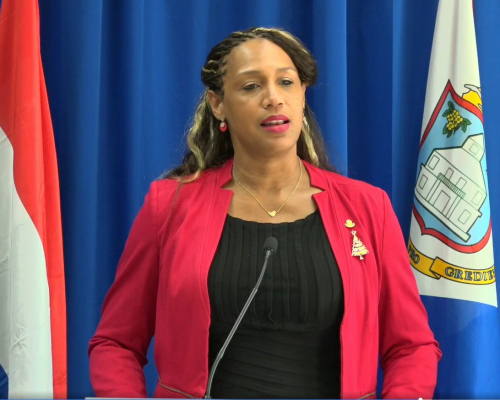
 PHILIPSBURG:--- As 2025 draws to a close, the people of St. Maarten are left to reflect on a year marked by a string of controversies and questionable decisions from the Ministry of Tourism, Economic Affairs, Transport, and Telecommunication (TEATT), led by Minister Grisha Heyliger-Marten. While the year was full of promises, the results have raised serious questions about transparency, accountability, and the government's priorities. Let's count down the most significant blunders that have defined the Minister's year.
4. The Botched Holiday Booths
Kicking off our countdown is the recently launched Holiday Booths Pilot Program. Intended to bring festive cheer to Philipsburg, the program has instead been criticized as a poorly executed and underwhelming initiative. The last-minute announcement and limited scope left many wondering if it was a genuine effort to boost the local economy or a hastily assembled project. For many, the "Christmas atmosphere" the Ministry aimed for felt more like a ghost of holidays past, failing to deliver the vibrant experience promised to vendors and the public.
3. A Legal Reversal: The District 721 Warning
In November, the Ministry of TEATT dealt a significant blow when the Court of First Instance annulled a formal warning issued to the restaurant and bar, District 721. The court found "significant contradictions" in the Ministry's evidence regarding an alleged noise violation. The official warning letter stated that "no violations were found on May 2," directly contradicting the Ministry's later claims used to justify the penalty. This ruling was not just a victory for local business; it was a public rebuke of the Ministry's careless approach to regulatory enforcement and a clear signal that its actions must be based on credible facts, not administrative whims.
2. The Transport License Scandal
This year, the lid was blown off with a long-simmering scandal of duplicated public transport licenses. Leaked documents revealed a deeply corrupt system where taxis, bus, and tour licenses were allegedly hoarded by political elites and their associates for decades. The investigation uncovered that single license numbers were issued to multiple individuals, creating phantom assets and a chaotic, unregulated market. While this issue predates the current Minister, her administration is now tasked with untangling this mess. The proposed five-phase reform package is an ambitious promise, but the public remains skeptical whether it will lead to genuine change or simply be another layer of bureaucracy over a deeply entrenched system of cronyism.
1. The Half-Million Guilder Hole: The Philipsburg Marketplace
Topping the list of scandals is the glaring failure of the Philipsburg Marketplace project. The public was shocked to learn that approximately 467,000 guilders have been paid to a contractor for a project that has yet to break ground. Despite a series of shifting timelines and excuses ranging from soil quality to a delayed roof quote, the marketplace remains a vacant lot—a monument to broken promises. The initial completion estimate of six to eight months, announced in August, has evaporated, leaving vendors and the public with nothing but questions. The expenditure of nearly half a million guilders with no visible progress is a staggering example of poor planning and a profound lack of accountability with public funds.
A Call for Change in 2026
As we bid farewell to 2025, the catalogue of missteps under the TEATT Ministry paints a grim picture. From questionable spending and legal defeats to failed initiatives and inherited corruption, public trust has been severely eroded. The coming year must be one of reckoning. The people of St. Maarten deserve more than excuses and shifting goalposts; they deserve transparent, effective, and accountable governance. The hope for 2026 is that lessons will be learned, and leadership will finally prioritize the public's interest over political expediency.