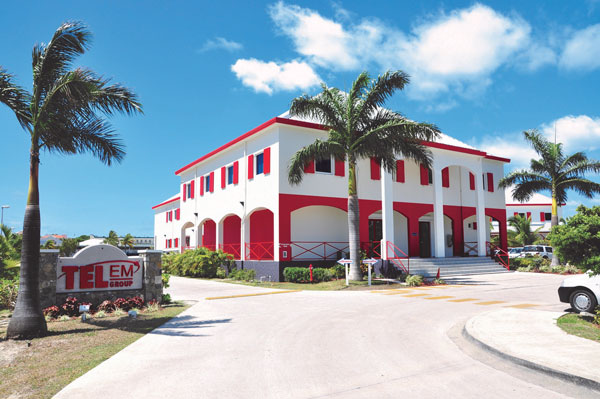
 PHILIPSBURG:--- The St. Maarten Communication Union (SMCU) has issued a blistering condemnation of the government’s handling of the crisis at TelEm, labeling the ongoing situation a "governance failure" characterized by years of silence, mismanagement, and the systematic destruction of local livelihoods.
In a sharply worded press release, SMCU President accused successive administrations of ignoring repeated warnings about the telecommunications company’s steady decline. The union paints a grim picture of a national pillar crumbling under the weight of poor leadership while ministers sleep at the wheel.
A Pattern of Neglect and Broken Promises
According to the SMCU, the government’s inaction is "no longer just disappointing; it is unacceptable." The union highlights a disturbing cycle where warnings from employees and concerned citizens are dismissed, only for promises to be made during election seasons and promptly forgotten once votes are secured.
"What has remained constant is a pattern: employees are sent home, while those in positions of power are protected," the statement reads. The union notes that while nearly 170 dedicated employees have been fired—devastating families and livelihoods—no executive or board member has faced public accountability for the decisions that plunged the company millions into debt.
Financial Mismanagement and Dubious Leadership Structure
The letter directs heavy criticism toward the executive leadership structure. It specifically cites the tenure of Helma Etnel, who functioned as both CFO and acting CEO. During this period, the union claims millions were spent on the "Fiber to the Home" project—which remains incomplete—while the company accrued massive debts.
Disturbingly, the union points out that history is repeating itself. Mr. Hato is currently serving as CFO while also acting in executive roles, a structure the SMCU argues is "risky and harmful."
The union also questioned the logic behind claiming poverty while hiring foreign labor. After local workers were dismissed due to alleged financial constraints, the government reportedly approved hiring workers from Colombia and other countries. "How can there be money for foreign labor, but no money to retain or rehire local employees who gave years of service?" the union asks.
Legal and Ethical Violations Alleged
Perhaps the most explosive allegation involves the handling of pension contributions. The union claims that instructions were given to Vida Nova to deduct both the employer’s and the employee’s AOV contributions from the salaries of dismissed workers.
The SMCU calls this a "violation of the law" and "financial abuse," noting that St. Maarten law mandates AOV contributions be shared. "An employer cannot shift its legal obligation onto the worker," the union states, demanding immediate investigation into what it calls a direct conflict with the country's legal framework.
Dangerous Dependencies on Curaçao
The union also raised alarms regarding national security and infrastructure independence. TelEm has reportedly placed a major switch in Curaçao, a move the SMCU calls a "dangerous dependency." The union argues that in times of crisis, relying on infrastructure outside the country creates vulnerability.
Furthermore, the union fears that TelEm is sharing critical systems and operational knowledge with Aqualectra in Curaçao, potentially aiding a competitor while TelEm itself remains fragile. "St. Maarten simply cannot afford another round of financial damage or strategic missteps," the letter warns, suggesting that outsourcing plans may be in motion that would permanently sideline local workers.
A Call for Immediate "Reset"
The SMCU is demanding a complete overhaul of TelEm’s governance. Their demands include:
- Immediate appointment of a local CEO and a full leadership team promoted from within the organization.
- A complete replacement of the board with new, accountable members.
- An immediate halt to sharing technical information with entities in Curaçao.
- Full transparency regarding the use of consultants and foreign labor, including verification of their tax contributions to St. Maarten.
"Ministers, stop playing politics. Wake up and take the bull by the horn," the President urged. "Continuing to look the other way while the same patterns repeat is not leadership, it is neglect."
The union’s message is clear: the time for presentations and empty promises is over. Without immediate, decisive action to protect the company and its workers, the government risks the collapse of a critical national asset.
STATEMENT FROM SMCU
The government’s continued silence and inaction regarding the situation at TelEm is no longer just disappointing it is unacceptable. For years, administration after administration has been warned by the union, employees, and concerned citizens about serious mismanagement, poor decision making, and the steady decline of a government owned company that once stood as a national pillar. Those warnings were ignored. Promises were made during election seasons, and once votes were secured, those promises disappeared.
What has remained constant is a pattern: employees are sent home, while those in positions of power are protected. It is painfully clear that several governments that has taken office has approved decisions to send workers home, yet has failed to seriously question, challenge, or investigate the management actions that pushed TelEm millions into debt. The only action that ministers and the board seem prepared to approve, over and over again, is job cuts. No real accountability. No real intervention. No protection for the people who built the company.
Nearly 170 dedicated employees have paid the price for years of decisions they did not make. Families suffered. Livelihoods were destroyed. And still, no one has been held publicly accountable for the financial state of the company.
Helma Etnel was allowed to function as both CFO and acting CEO, with full approval from the board and the government. During that period, employees were sent home and millions were taken on for the Fiber to the Home project, a project that remains incomplete while the loan and other debts remain unpaid. She is no longer in those positions, yet the company was left in serious financial distress. To this day, there has been no clear, visible accountability, no public explanation, and no reassurance that the country’s laws and standards of governance were upheld. MER won the case and Telem had to pay millions. Why were the ministers asleep?
What makes the situation even more disturbing is that the same mistakes appear to be happening again. The government is once more allowing the CFO to effectively run the company without appointing a CEO. The last time one person held both positions, TelEm ended up in deep financial difficulty and is still in that position. Yet again, Mr. Hato is now serving as CFO while also acting in both roles. This is not leadership, this is a repeat of a structure that already proved to be risky and harmful.
After employees were sent home for the second time because the company claimed it could no longer afford to keep them, the government then approved the hiring of workers from Colombia and other countries. Today, TelEm reportedly has employees from Curaçao on the payroll earning high salaries, with housing and travel expenses covered by the company. How can a company that claims to be in deep financial trouble afford these kinds of expenses? How can there be money for foreign labor, but no money to retain or rehire local employees who have given years of service?
Management has refused to rehire those who were sent home, saying they already received compensation. But compensation does not replace a career. It does not replace stability. It does not justify why experienced local workers were let go while new hires are brought in at significant cost. Another extremely serious matter that cannot and must not be ignored is the instruction reportedly given by Mr. Hato to Vida Nova to deduct both the employer’s and the employee’s AOV contributions from the salaries of the employees who were sent home. This action raises major legal and ethical concerns. Vida Nova is now claiming that they are not the employer, and for that reason the full contribution must be carried by the employees. That position is deeply troubling and, in the view of the union, amounts to a clear violation of the law and a form of financial abuse against workers who are already in a vulnerable position.
The law of St. Maarten clearly states that AOV contributions are to be shared between employer and employee. An employer cannot shift its legal obligation onto the worker. The employer’s portion is not optional, and it cannot be passed down to employees simply because they were sent home. These workers were employees of TelEm, not employees of Vida Nova. Therefore, the responsibility for the employer’s share of contributions cannot legally be transferred onto them.
Furthermore, the last salary payments and all related obligations should come from the employer. Employees did not enter into employment with Vida Nova, nor did they agree to assume the employer’s legal responsibilities. For workers who have already lost their jobs to now be forced to carry both sides of a mandatory contribution is not only unfair, it appears to be in direct conflict with the legal framework of St. Maarten.
This matter demands immediate investigation and urgent intervention. This is not a minor administrative issue. This concerns compliance with national laws, the protection of workers’ rights, and the proper handling of mandatory social contributions.
Ministers must wake up and take action. Allowing this to continue sends the message that employers can ignore their legal obligations while employees are left to carry the burden That cannot be accepted in a country governed by law. Employees are awaiting their refund.
At the same time, NTCS continues to make presentations and projections, but the reality remains unchanged: the Fiber to the Home loan and other debts are still unpaid. Presentations do not pay debts. Presentations do not rebuild trust. Presentations do not bring people back to work.
Another question that demands urgent and transparent answers is this: of all the money being paid to consultants and foreign labor, how many of these individuals are actually paying taxes in St. Maarten? How many are contributing to SZV, AOV, and the very systems that support this country?. If these individuals are not properly registered, not paying taxes locally, and not contributing to social funds, then this represents not only a serious imbalance but a potential violation of the financial and labor laws of St. Maarten. The people of this country deserve to know whether public and company funds are being used to benefit individuals who are not even contributing back into the economy, while loyal local workers were pushed aside. This is a matter of fairness, legality, and national responsibility, and it cannot continue without scrutiny.
Employees also continue to question past decisions and investments that never appeared to deliver real returns for the company. Concerns have long surrounded ventures that reportedly did not generate income, yet required attention and resources. Smitcoms Dominicana the cartoon company that was managed by the former CTO Eldert Louisa. Where is the accountability? There are also lingering questions about major operational moves, including the handling of the Cable TV business, which disrupted livelihoods and left employees and customers facing the consequences. Workers lost their jobs and security, and once again, those decisions were approved at the highest levels without visible accountability.
The pattern is impossible to ignore. Employees lose their jobs. The company sinks deeper into debt. Leadership changes hands. And still, no one is seriously questioned, no one is held responsible, and no thorough public explanation is given. How can so many employees lose everything because the company claims it has no money, while spending continues in other areas without scrutiny? How can this continue year after year without a full, independent investigation into the decisions made by the board and executive leadership?
This is not just a management issue. This is a governance failure.
TelEm is a government-owned company. That means the government has a duty to protect it, to protect the people who work there, and to ensure that proper oversight is exercised at all times. Instead, what employees and the public have witnessed for years is silence, delay, and approval of decisions that continue to weaken the company while hurting the very people who kept it running.
The people of St. Maarten deserve answers. Employees deserve justice. And the country deserves transparency and accountability from those entrusted to protect its institutions. Continuing to look the other way while the same patterns repeat is not leadership , it is neglect.
Today, TelEm has a major switch located in Curaçao, a decision that raises serious and troubling questions. St. Maarten has endured multiple natural disasters over the years, including some of the worst in its history, and in those critical moments’ communication was restored without the need for any core switch or essential equipment being based outside of the country. Placing such important infrastructure in another island creates a dangerous dependency and a potential vulnerability for St. Maarten, especially in times of crisis when communication is most critical for public safety, emergency response, and national stability.
At the same time, there are growing concerns that Aqualectra in Curaçao is preparing to launch a telecommunications company and is seeking information from TelEm regarding the systems and operational structure it uses. This raises serious red flags. A government-owned company that is already struggling financially should not be in any position where its knowledge, systems, or technical direction could potentially benefit the creation of a competing operation elsewhere, especially while it continues to carry debt and uncertainty at home.
What makes this situation even more alarming is the belief that efforts are being made, with the involvement and support of the acting CFO, to assist in this process while TelEm itself remains in a fragile and vulnerable state. Employees fear that decisions are being made that could weaken the company’s long-term position, and possibly leave it exposed, just as it was during previous periods of poor leadership. St. Maarten simply cannot afford another round of financial damage or strategic missteps.
Employees fear that TelEm’s services may soon be outsourced to Curaçao, which would leave local workers without jobs and hand over critical operations to another country as if St. Maarten is incapable of managing its own telecommunications. This is not just poor planning, it is a deliberate financial strategy that puts profit and convenience over the livelihoods of St. Maarten’s people. Outsourcing in this manner threatens national control over essential services, weakens the local economy, and sends a chilling message to dedicated employees: years of loyalty and hard work mean nothing when decisions are made to benefit outsiders at the expense of the local workforce. The government must recognize that allowing such a plan to proceed is not only irresponsible but a direct attack on the country’s financial independence, local employment, and the security of its critical infrastructure.
This is why the government’s continued delay in appointing a strong, independent local CEO and a full leadership team is so serious and dangerous. Without proper leadership in place, one individual is left to control critical decisions that affect the company, its future, and the country’s communication security. That is not healthy governance, and it puts St. Maarten at risk.
There are capable, experienced, and dedicated professionals within TelEm right now who have kept the company running through some of the most difficult times in its history. These are the same employees who maintained operations during disasters, who restored services when systems went down, and who continue to carry the company despite uncertainty and instability. There is talent within the organization that can be promoted and trusted to lead. Choosing not to invest in local leadership while making decisions that increase external dependence sends the wrong message and places the country in a vulnerable position.
Communication is not just a business it is a national lifeline. Any decision that weakens control, creates dependency, or risks the stability of that lifeline must be treated with the highest level of seriousness. The longer the government delays in taking firm action, appointing proper leadership, and ensuring that the company’s direction is focused on strengthening St. Maarten first, the greater the risk becomes for the country, its people, and its future.
Ministers, stop playing politics. Wake up and take the bull by the horn. The time for talk, excuses, and delays has passed. What is needed now is immediate, decisive, and responsible action to protect TelEm and, by extension, the country.
A complete reset in governance is necessary. All board members should be newly appointed, and TelEm needs strong, committed local leadership. New directors must be selected locally and, wherever possible, promoted from within the organization. The company already has experienced, competent, and dedicated employees who have kept it running through years of challenges, crises, and uncertainty. These are the people who understand the company, the systems, and the needs of St. Maarten, and they should be given the opportunity to lead.
At the same time, all sharing of internal systems, technical information, and operational knowledge with Curaçao should be halted immediately until there is full transparency and clear safeguards in place. TelEm’s priority must be the protection and strengthening of St. Maarten’s telecommunications infrastructure, payment of the outstanding millions and not supporting outside interests while the company itself remains financially strained.
This is not a small matter. This is about the survival of a national company, the protection of local jobs, and the safeguarding of a critical service that the entire country depends on. The government must act now firmly, responsibly, and in the best interest of the people, before the damage becomes irreversible.
The union calls on the government to stop delaying and to take immediate, decisive action to protect TelEm and its employees. Enough is enough. The people who have kept this company running through years of mismanagement, debt, and uncertainty deserve answers, not empty promises. The government must clearly state when action will be taken and exactly what steps will be implemented to restore stability, enforce accountability, and safeguard local jobs. The appointment of competent local leadership, financial recovery measures, and protections for employees. Anything less is a blatant failure of responsibility, a betrayal of the workforce, and a serious threat to the future of St. Maarten’s critical telecommunications infrastructure. The time for talk is over, the time for action is now.