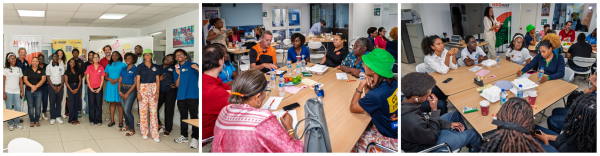
 PHILIPSBURG:--- A regional webinar and networking session held on March 25, 2026, at the Foresee Foundation office brought together youth and nonprofit organizations from across the Caribbean to explore practical strategies for strengthening youth engagement in community initiatives. The event, part of a broader inter-island effort supported by Oranje Fonds and Stichting Kinderpostzegels, combined virtual knowledge-sharing with in-person dialogue to bridge ideas and action.
Following the inter-island webinar entitled Engaging Youth in NGOs: Why, What and How, an in-person local follow-up session was organized to translate the shared insights into the local St. Maarten context. The session brought together a mixed group of youth (under 29) and representatives from NGOs and community organizations, with the majority of participants attending in an organizational capacity. The overall aim was to facilitate dialogue between youth and organizations, reflect on the relevance of the webinar content, identify barriers to youth engagement, and explore opportunities for collaboration and follow-up actions.
Through interactive discussions and activities, the participants discussed key topics under the theme of youth volunteerism. For the evening's core activity, youth and organizations were divided into groups to discuss barriers to youth volunteerism. From the youth's perspective, they highlighted practical and motivational challenges, including long hours, lack of recognition, limited structure, transportation issues, and conflicts with school schedules. These insights underscored the need for flexible, meaningful, and well-organized volunteer opportunities.
Organizations, on the other hand, reflected on internal constraints such as limited capacity, lack of trained staff, unclear structures, and difficulty understanding youth needs. They recognized that improving youth engagement requires stronger internal systems and better support mechanisms.
When both groups reconvened, shared challenges emerged, including limited access to schools, ineffective outreach channels, and barriers to participation, such as financial pressures, transportation, and competing responsibilities. Participants suggested alternative strategies, such as peer outreach, influencer outreach, and school-based programs, to better connect with youth.
The final activity was a “marketplace” exercise that allowed youth and organizations to exchange skills, needs, and opportunities using a structured matching activity. This resulted in active networking and the formation of potential partnerships.
This webinar and networking session represent an important step toward facilitating dialogue between youth and civil society, fostering meaningful connections and paving the way for a more engaged and empowered generation of young changemakers.