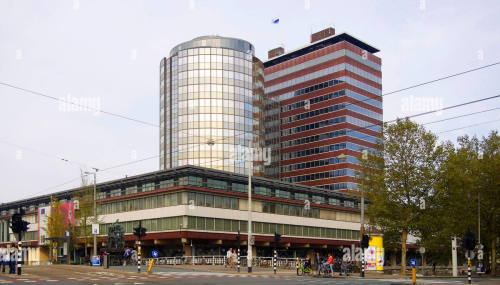
 THE HAGUE:--- The Dutch economy is entering a period of heightened uncertainty, according to a recent warning from De Nederlandsche Bank (DNB), which has declared a “code orange” alert. This signal reflects growing concerns about structural weaknesses, global instability, and rising pressure on households.
What “Code Orange” Means
The “code orange” designation is not a crisis yet—but it is a serious warning. It indicates that risks to economic stability are increasing and that immediate attention is needed to prevent further deterioration. The central bank is effectively cautioning policymakers, businesses, and citizens that the economy is becoming more vulnerable to shocks.
At the heart of this warning are global geopolitical tensions and trade disruptions. The Netherlands, as a highly open and trade-dependent economy, is particularly exposed to international developments. According to DNB, an escalation in global trade conflicts could slow Dutch economic growth dramatically, potentially bringing it close to a standstill.
Pressure on Households
One of the most pressing concerns is the financial strain on households—especially those with lower incomes. Energy costs remain a major burden, even though the situation has improved since the peak of the 2022 energy crisis. By 2026, about a quarter of low-income households are still expected to spend more than 10% of their disposable income on energy.
Housing affordability is another growing issue. House prices are projected to rise further in the coming years, making homeownership increasingly out of reach. By 2027, only one in three households is expected to afford an average home, a sharp decline from previous years.
Structural Weaknesses in the Economy
Beyond immediate pressures, the Dutch economy faces deeper structural challenges. These include:
- An overloaded electricity grid, which is slowing down new housing and industrial projects
- Environmental restrictions, such as nitrogen regulations, limiting development
- Policy uncertainty discourages business investment
These bottlenecks are not short-term issues—they point to systemic inefficiencies that could hinder long-term growth.
A Call for European Cooperation
DNB emphasizes that the Netherlands cannot navigate these challenges alone. As a relatively small economy, it depends heavily on international cooperation—particularly within the European Union.
The central bank recommends strengthening the European single market and maintaining a rules-based global trading system. This approach would reduce dependency on individual trading partners and improve resilience against global shocks.
Policy Recommendations
To stabilize and strengthen the economy, DNB outlines three key actions:
- Deepen European economic cooperation
- Maintain strong fiscal buffers to absorb future crises
- Address structural bottlenecks that hinder investment and growth
These measures aim to build resilience rather than provide quick fixes.
Conclusion
The “code orange” warning from De Nederlandsche Bank is a clear signal that the Dutch economy is at a critical juncture. While not yet in crisis, mounting pressures—from global tensions to domestic structural issues—require urgent and coordinated action.
Whether the Netherlands can navigate this period successfully will depend on its ability to adapt, cooperate internationally, and tackle long-standing internal challenges.