




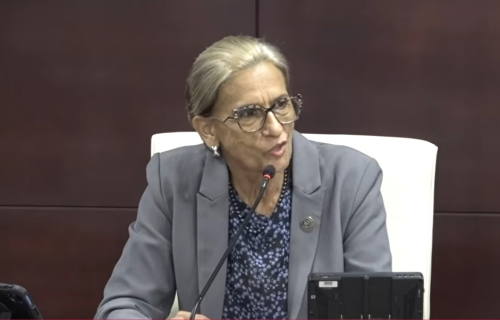
 PHILIPSBURG:--- During discussions at the Interparliamentary Kingdom Consultation (IPKO) on Saturday in The Hague, Member of Parliament Sarah Wescot-Williams emphasized the urgent need to make critical national discussions more accessible to the people of Sint Maarten, linking the issue directly to her call for English in official documents and forums.
Following presentations by several distinguished experts on matters of significant importance to the country and the Kingdom, Wescot-Williams raised concerns about the gap between expert analysis and public understanding of what is at stake.
“Too often, valuable information is shared among politicians, professionals, and policymakers, while the wider population remains disconnected from the conversation,” Wescot-Williams noted. “If we are serious about shaping the future of Sint Maarten, then the people of Sint Maarten must be fully informed participants in that process.”
According to Wescot-Williams, this challenge lies at the heart of the Open Parliament principles she champions, particularly through her participation in regional and international parliamentary forums, including those of ParlAmericas.
Particular attention was given to language as a barrier to public engagement. Wescot-Williams highlighted the importance of translating and adapting key messages into the languages and communication styles most familiar to the people of Sint Maarten, thereby ensuring that discussions about governance, development, sustainability, and constitutional matters are accessible to all.
She also underscored the importance of cooperation among institutions, organizations, and community stakeholders in creating meaningful opportunities for public participation.
Wescot-Williams further encouraged those involved in forums such as IPKO to consider how to communicate the outcomes of these discussions more effectively to citizens, enabling them to engage meaningfully with matters that will impact the country’s future.
While acknowledging the complexity of many of the issues discussed, she expressed confidence that greater public awareness and participation can strengthen democratic decision-making and national development.
“We must remain realistic about the challenges we face, but we must also remain optimistic about our capacity as a people to confront them together,” Wescot-Williams concluded.