~Parliament Told Billing Errors Took Years to Correct While Millions in Proposed Relief Measures Were Deemed Financially Unsustainable~
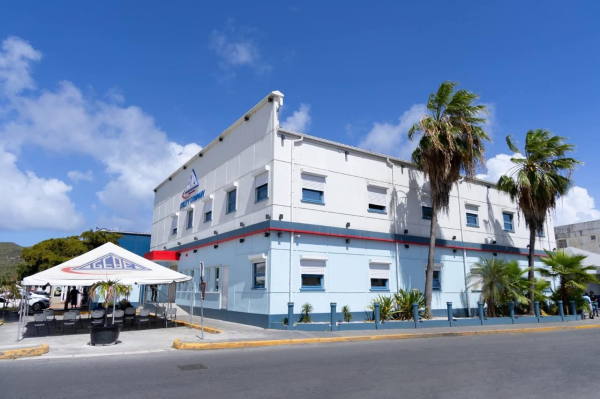 PHILIPSBURG: --- Nearly four years after a devastating cyberattack crippled NV GEBE's operations, Parliament was told Friday that the utility company spent years correcting billing errors, reconstructing customer accounts, and restoring financial records after incorrect meter readings led to inaccurate bills issued to consumers.
The disclosure came during the continuation of Parliament's public meeting on GEBE, where Prime Minister Dr. Luc Mercelina responded to questions from Members of Parliament about billing disputes, consumer complaints, and the lingering effects of the 2022 cyberattack that brought the utility to a standstill.
The debate also revealed another key factor behind one of the public's biggest frustrations: why promised relief on electricity bills has not materialized despite years of complaints about rising utility costs.
Billing restart led to incorrect invoices
Mercelina revealed that when GEBE resumed billing operations following the cyberattack, the utility initially relied on January 2022 meter readings to restart the system.
As a result, invoices generated for March, April, and May 2022 were based on incorrect consumption data.
"The correct meter reading was entered in June 2022," the Prime Minister explained, adding that the utility was subsequently forced to reverse the incorrect bills and replace them with corrected invoices.
The correction process affected customer accounts across the island and required extensive review of meter readings, invoices, and payment histories.
Years of Reconstruction
While many residents experienced the immediate effects of the cyberattack through delayed bills and service disruptions, Friday's parliamentary discussion shed light on the enormous administrative effort that followed behind the scenes.
According to Mercelina, correcting the errors was not a matter of simply generating new invoices.
Payments that had already been made on the incorrect bills first had to be identified and then reallocated to the newly generated accounts.
The process, he said, required considerable time and effort and continued throughout 2023 as GEBE worked to rebuild its financial administration and restore confidence in its billing system.
For many consumers, the complexity of the process may help explain why billing discrepancies, account adjustments, and reconciliation issues persisted long after the cyberattack itself.
Consumer Frustration Continues
The revelations come amid continued public frustration regarding electricity bills, outstanding balances and account disputes.
Over the years, many residents have questioned the accuracy of invoices received after the cyberattack, with some claiming they were unable to determine whether amounts being charged reflected actual consumption.
Parliament's discussion confirmed that GEBE has been dealing with the consequences of the attack for much longer than many consumers may have realized.
The utility's efforts to reconstruct financial records, reconcile payments, and validate account balances have become a major part of its post-cyberattack recovery process.
Why Relief Never Arrived
The parliamentary debate also provided new insight into a question consumers have repeatedly asked for years: if the government recognized the burden of high electricity bills, why did relief never materialize?
According to Mercelina, the government reviewed multiple proposals to reduce electricity costs, including direct subsidies, concession-fee reductions, throughput-fee waivers, and other measures to provide financial relief to consumers. However, many of those proposals carried significant financial consequences for either the government, GEBE, or other public entities.
One proposal involved redirecting GEBE's concession fee to reduce customer bills. The government calculated that such a measure would cost approximately NAf. 7.8 million annually in lost revenue. Another proposal involving direct financial assistance and subsidies was examined by the Council of Ministers but was ultimately returned for further review after concerns were raised about affordability and long-term sustainability.
The Prime Minister stressed that while relief remains possible, it must be lawful, financially responsible and sustainable.
Cyberattack Recovery and Relief Linked
The discussion highlighted what may be one of the lesser-known consequences of the cyberattack.
While consumers were dealing with delayed bills, disputed balances, and uncertainty regarding their accounts, GEBE was simultaneously attempting to reconstruct its financial records and restore confidence in its accounting systems.
The government argued that before major relief measures could be implemented, it first needed reliable financial information regarding GEBE's actual costs, revenues, and obligations.
Mercelina further noted that tariff adjustments require cost-oriented information from the utility, data that the government said had not always been readily available. As a result, authorities sought greater regulatory oversight through the Bureau of Telecommunications and Post (BTP) before pursuing major tariff interventions.
How Consumer Disputes Are Being Resolved
In response to questions from Members of Parliament, the Prime Minister said that consumers who believe their bills are inaccurate can challenge the charges by engaging directly with GEBE.
According to Mercelina, disputes are handled via email, WhatsApp, and in-person meetings with customers. Utility personnel then conduct a full review of meter readings, invoices, and payment histories to determine whether discrepancies exist.
The process is intended to verify account accuracy and resolve outstanding disagreements regarding balances owed.
New Safeguards Introduced
The Prime Minister also outlined measures implemented to reduce the risk of future billing errors.
Among the safeguards now in place is an automated system that flags unusual consumption patterns. Bills showing a usage increase or decrease of more than 30 percent compared to the previous billing cycle are automatically held from issuance until the reading can be reviewed.
Additionally, invoices exceeding 10,000 guilders are subject to manual review before being sent to customers.
The government says these controls are designed to identify anomalies before they reach consumers and prevent large-scale billing mistakes from occurring.
Recovery Still Shaping Today's Debate
Friday's parliamentary session served as a reminder that the consequences of the 2022 cyberattack continue to influence discussions surrounding GEBE today.
What began as a cyber crisis evolved into a years-long effort to reconstruct customer accounts, rebuild financial records, and restore confidence in the utility's billing system. At the same time, the government says the uncertainty surrounding financial data complicated efforts to implement consumer relief measures that could have cost millions of guilders.
For consumers still questioning old balances, disputed invoices or why relief never arrived, Parliament's debate offered a clearer picture of how deeply the cyberattack affected the utility—and why its effects are still being felt years later.