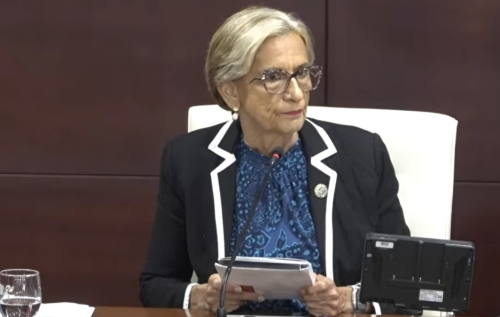
 PHILIPSBURG:--- Members of Parliament on Monday ratified the final report containing the extensive questions posed during the Central Committee examination of the draft 2026 National Budget, officially sending the document to the Government and triggering the next phase of the budget approval process.
The ratification means the Council of Ministers and the various ministries must now prepare comprehensive responses to hundreds of questions raised by Members of Parliament before the draft budget returns to the floor for public debate.
During Monday's continuation of Central Committee Meeting No. 23, Parliament Chair Sarah Wescot-Williams confirmed that while August 4 had initially been proposed as the date for the public handling of the budget, the timetable is now contingent on the Government's ability to prepare answers to the unprecedented volume of questions submitted by MPs.
The Chair explained that once the report was ratified and officially transmitted, Parliament would immediately consult with the Government to determine whether the previously proposed two-week preparation period remains realistic.
"It is not Parliament's insistence on the date," the Chair explained, noting that once Government indicates how much time is required to prepare its responses, Parliament will adjust the schedule accordingly and notify Members without delay.
MP Calls for more realistic timeline
The discussion largely centered on concerns raised by MP Darryl York, who questioned whether the proposed schedule gives the Government sufficient time to respond adequately to the unusually large number of questions submitted during the budget review.
York argued that Parliament should adopt a more proactive approach rather than waiting for the Government to request additional time.
He maintained that if the original two-week period was already considered tight before the final report was compiled, it would almost certainly be insufficient after the addition of what the Chair herself described as an "extraordinary amount of questions."
York also proposed that Members of Parliament receive 24 to 48 hours to review final reports before being asked to ratify them, allowing legislators adequate time to study complex budget documents before voting.
Chair acknowledges unprecedented workload
Responding to the concerns, Chair Wescot-Williams acknowledged that the 2026 budget review has generated one of the most comprehensive reports Parliament has handled.
She explained that while Central Committee reports are normally ratified during the same meeting in which discussions conclude, the sheer volume of questions submitted by Members made this year's process exceptional.
The Chair said Parliament would take York's suggestions into consideration for future proceedings, particularly where unusually lengthy reports require additional review time by Members before ratification.
Government now under pressure
With the report officially ratified, attention now shifts to the Government, which must prepare detailed written responses covering every ministry and every policy area questioned by Parliament.
The answers are expected to address key issues surrounding government spending, revenue projections, capital investments, staffing, economic development, justice, healthcare, education, infrastructure, and numerous policy initiatives contained in the draft 2026 National Budget.
Only after those responses are submitted will Parliament proceed with the public debate, where Members will determine whether the draft budget should ultimately receive legislative approval.
Monday's meeting formally concluded after the report was ratified, marking another important milestone in what has become one of the most closely scrutinized budget processes in recent years.