~Cell Shortages force release of suspects while rehabilitation programs continue to disappear~
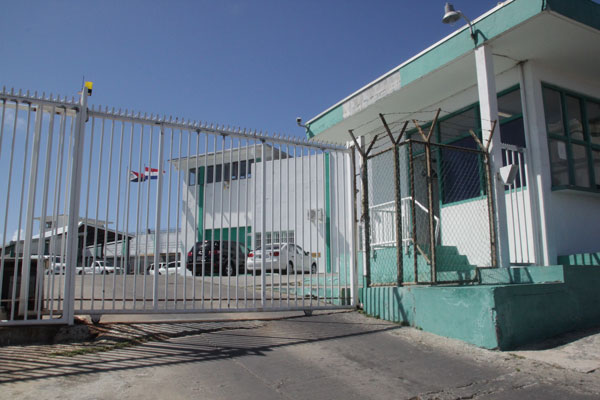 PHILIPSBURG:--- The crisis at the Pointe Blanche House of Detention has reached a critical stage, with severe overcrowding, deteriorating detention conditions, and the collapse of meaningful rehabilitation programs now directly affecting the administration of justice in St. Maarten.
Recent confirmation from the Prosecutor's Office has revealed that the prison's lack of available detention space is no longer merely an operational challenge—it is influencing judicial decisions, forcing prosecutors to seek the release of suspects who would otherwise remain behind bars pending trial.
In a recent court matter, the Prosecutor's Office openly acknowledged that the suspension of a suspect's pre-trial detention was requested because of the lack of detention capacity at Pointe Blanche Prison. Prosecutors further admitted that these decisions are becoming increasingly common due to the chronic shortage of available cells.
Rather than requesting an outright release, prosecutors sought a suspension of detention under strict court-imposed conditions, including the surrender of the suspect's passport and a restraining order protecting the alleged victim. The Court approved the request.
The admission has once again placed the spotlight on the worsening conditions inside the country's only correctional facility.
Overcrowding Now Dictating Criminal Justice
For years, successive governments have acknowledged that Pointe Blanche suffers from overcrowding, deteriorating infrastructure, staff shortages, and aging facilities. However, the latest disclosure demonstrates that the problem has escalated to the point where prison capacity is now influencing decisions that should be based solely on legal considerations.
Legal professionals warn that detention space should never become the determining factor in whether a suspect remains in custody. Yet the Prosecutor's Office has confirmed that operational realities are forcing difficult decisions to ensure that the limited number of available cells are reserved for the most urgent cases.
The situation has raised concerns among victims, law enforcement officials, and the wider public, who increasingly question whether the justice system can function effectively while its correctional facility operates beyond capacity.
Isolation cells no longer available for discipline
One of the clearest signs of the prison's overcrowding is the reported use of isolation cells to house members of the general inmate population.
Sources familiar with conditions inside Pointe Blanche indicate that cells originally designed for disciplinary segregation or inmate protection are now occupied simply because there are no other spaces available.
This means prison management reportedly has little or no dedicated disciplinary housing left.
When inmates become involved in fights, assault other prisoners, or violate prison regulations, correctional officers are often unable to isolate them as intended because the segregation units are already full.
Instead, disciplinary options have become extremely limited, leaving officers with fewer tools to maintain order inside the facility.
Correctional experts warn that this not only undermines prison discipline but also increases security risks for both inmates and prison staff.
Rehabilitation has Become an afterthought
Equally troubling is the continued decline of rehabilitation within Pointe Blanche.
While incarceration is intended to protect society, correctional institutions are also expected to prepare offenders to successfully reintegrate into the community upon release.
That objective appears to be slipping further out of reach.
Information obtained regarding current prison operations indicates that many of the educational and vocational programs that once formed part of inmate rehabilitation have either been reduced or discontinued altogether.
The General Educational Development (GED) program, which previously provided inmates with an opportunity to earn an internationally recognized academic qualification, is reportedly no longer available.
Traditional educational instruction and structured vocational training have also largely disappeared.
Instead, many of the activities currently offered inside the prison are supported through European Union-funded initiatives, including photography, modeling, and other enrichment activities.
While those programs provide inmates with constructive engagement, critics argue they cannot replace comprehensive rehabilitation initiatives designed to reduce recidivism.
Meaningful correctional rehabilitation normally includes literacy education, vocational certification, trade skills, anger management, substance abuse treatment, life-skills coaching, employment preparation, and psychological counseling.
Without those opportunities, inmates leave prison with little improvement in their educational or employment prospects, increasing the likelihood that they will reoffend.
An Expensive Cycle of Reoffending
Correctional specialists have long maintained that prisons should do more than simply warehouse offenders.
Every inmate who leaves prison without education, vocational skills, behavioral intervention, or treatment represents a greater risk of returning to criminal activity.
The absence of meaningful rehabilitation creates a costly cycle in which offenders repeatedly enter and exit the justice system, placing continued strain on police, prosecutors, the courts, and correctional services.
Investing in rehabilitation has consistently been shown internationally to reduce repeat offending while improving public safety.
Years of warnings, few lasting solutions
The problems facing Pointe Blanche are far from new.
Over the years, reports have highlighted deteriorating infrastructure, inadequate maintenance, overcrowded housing units, staffing shortages, damaged facilities, and the urgent need for prison modernization.
Despite repeated promises by successive administrations, many of those longstanding deficiencies remain unresolved.
The prison continues to operate under conditions that challenge both security and rehabilitation, while correctional officers are expected to manage increasingly complex inmate populations with limited resources.
Justice system feeling the consequences
The Prosecutor's Office's recent admission makes clear that the consequences of prison overcrowding now extend beyond the prison walls.
The lack of available detention space is affecting prosecutorial decisions, influencing court proceedings, and raising legitimate concerns among victims who expect accused persons to remain in custody while awaiting trial.
At the same time, the lack of meaningful rehabilitation means many inmates leave prison no better equipped for life than when they entered.
Government faces growing pressure
The worsening situation raises several pressing questions for government:
- When will additional detention capacity become available?
- Why are isolation cells being used to house the general prison population?
- Why have accredited educational programs such as GED disappeared?
- What concrete rehabilitation strategy exists beyond externally funded projects?
- How will government restore vocational training, education, and behavioral treatment programs?
- What long-term plan exists to ensure that overcrowding no longer compromises the administration of justice?
The Pointe Blanche House of Detention was never intended to operate under the conditions now being described. Yet overcrowding has reached a point where correctional management, rehabilitation, and even criminal prosecutions are being affected.
The prison crisis is no longer simply a correctional issue. It has become a national justice issue, one that directly impacts public safety, victims' rights, and confidence in St. Maarten's criminal justice system. Without immediate investment in expanded detention capacity, modern facilities, and meaningful rehabilitation programs, the crisis at Pointe Blanche is likely to deepen, with consequences extending far beyond the prison gates.