~Draft fisheries policy remains unfinished while TEATT plans training, financing, and equipment to reduce post-harvest losses~
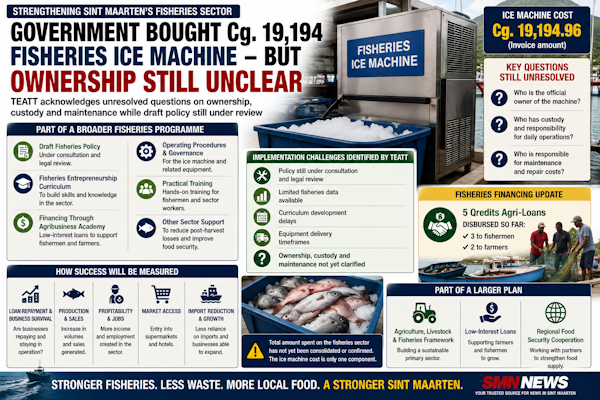 PHILIPSBURG:--- The government's attempt to rebuild Sint Maarten's fisheries sector includes an ice-making machine costing approximately Cg. 19,194.96, but TEATT's own working document identifies unresolved questions concerning the equipment's ownership, custody and maintenance.
The machine forms part of a broader fisheries-strengthening programme intended to improve fish preservation and reduce post-harvest losses.
TEATT says work includes a draft Fisheries Policy, a fisheries entrepreneurship curriculum, financing through the Agribusiness Academy, operating procedures and governance arrangements for the ice machine, practical training and other sector support.
However, the policy itself remains under consultation and legal review.
The Ministry also identifies limited fisheries data, curriculum delays, equipment delivery times and the need to clarify ownership, custody and maintenance of the equipment as implementation challenges.
The total amount spent on the fisheries sector has not yet been consolidated and confirmed.
That is important because the Cg. 19,194.96 invoice represents only the ice machine—not total fisheries expenditure.
Government has nevertheless begun financing primary-sector entrepreneurs.
The latest budget response states that five Qredits Agri-Loans have been disbursed: three to fishermen and two to farmers.
The programme is supposed to measure results through loan repayment, business-survival rates, production volumes, sales, profitability, employment, entry into supermarkets and hotels, reduction of imports and whether businesses become capable of expanding further.
Those are precisely the benchmarks Parliament should follow.
Sint Maarten has spent money on equipment, training and financing while simultaneously drafting the policy intended to govern the sector.
The question now is whether these individual interventions will produce a functioning commercial fisheries industry—or remain a collection of small projects without the data, infrastructure and governance necessary to scale production.