~Plans include solar installations at Hope Estate and Walter G. Nisbeth Road, backed by large-scale energy storage.~
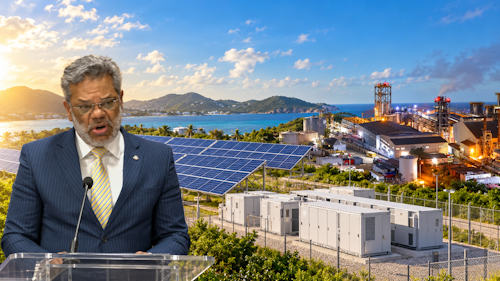 PHILIPSBURG:--- N.V. GEBE is advancing two major renewable-energy initiatives intended to improve the reliability of Sint Maarten’s electricity network and reduce the country’s heavy dependence on imported fossil fuel, Prime Minister Dr. Luc Mercelina announced Wednesday.
The initiatives consist of a utility-scale solar-generation project and a battery energy-storage system.
According to Mercelina, the planned solar project includes approximately four megawatts of ground-mounted solar capacity at Hope Estate and approximately 2.5 megawatts of solar-carport capacity at the Walter G. Nisbeth Road parking lot.
The battery energy-storage system is expected to provide approximately 25 to 26 megawatt-hours of storage capacity, supported by approximately 11 megawatts of inverter capacity.
The proposed locations for the battery-storage component include Pond Island, Seegersgut and Mullet Bay.
Mercelina said the projects will support grid stability, improve energy security and allow Sint Maarten to integrate more renewable energy into the national electricity network.
The battery system would allow electricity produced by the solar installations to be stored and used when demand is higher, or the grid needs additional support.
GEBE Responsible for Green-Energy Investment
Responding to questions during the Council of Ministers press briefing, Mercelina confirmed that the renewable-energy project falls under GEBE’s responsibility and budget.
“Concerning the alternative green-energy projects that we have, it is the responsibility of GEBE to look into alternative energies if we want to continue producing energy for Sint Maarten,” Mercelina said.
He explained that GEBE will develop the projects in cooperation with the government.
The battery-storage component will receive support through SDE++ funding from Europe. Mercelina said this contribution will provide additional value by expanding the country’s energy-storage capacity.
Fossil-Fuel Dependence Driving Electricity Costs
The Prime Minister said the government must address the structural factors driving high electricity costs while providing immediate assistance to vulnerable residents.
Sint Maarten remains heavily dependent on imported fossil fuel, leaving consumers and businesses exposed to unpredictable changes in international fuel prices.
Mercelina also said the influence of fuel supplier Sol on the final electricity price was discussed during a meeting involving the Prime Minister, MP Omar Ottley, and GEBE’s supervisory and management boards.
The parties examined the different factors contributing to energy prices, including Sol’s role in determining the final amount charged to consumers and GEBE’s base rate, which Mercelina said has remained at 25 cents for years.
Regulatory Adviser Planned
The government is also working to establish a regulatory adviser to advise the Minister of Tourism, Economic Affairs, Transportation and Telecommunication on energy pricing.
Mercelina said the regulatory function is intended to give government a better overview of—and greater control over—the electricity prices charged to consumers.
The Prime Minister maintained that the renewable-energy and battery-storage projects demonstrate that government and GEBE are planning beyond immediate utility relief and looking toward the country’s long-term energy needs.
If implemented as outlined, the projects would give Sint Maarten 6.5 megawatts of planned solar-generation capacity, alongside up to 26 megawatt-hours of battery storage to support the electricity network.