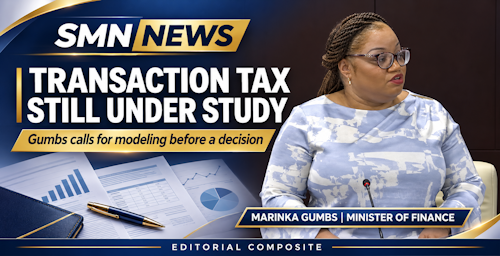
Gumbs targets early 2027 for the visitor levy to reach Parliament and says the government must first model who would pay under a financial transaction tax.
 PHILIPSBURG:--- A proposed visitor tax could bring in about Cg. 26 million in a full year after implementation and operating costs, Finance Minister Marinka Gumbs told Parliament on Monday, November 9. The figure is preliminary, and the timing of the first collections depends on legislative approval and whether the government has its payment systems ready.
Gumbs said the estimate draws on passenger data that includes residents, connecting passengers and people who could qualify for exemptions. The eventual rules on who pays will affect how much the levy brings in. The government excluded the projected proceeds from its draft 2027 budget.
When could the first guilder come in?
Responding to MP Veronica Jansen-Webster, Gumbs said the proposal was in final internal legal review. The government was targeting November for the Cabinet and Council of Advice stages, with submission to Parliament targeted for the first quarter of 2027.
Gumbs said the goal was to begin collecting the levy one to two months after the law takes effect. That schedule depends on the legislative process and on getting the hardware, software and payment arrangements in place. The government would also need to inform travelers and others affected by the new levy.
MP Sjamira Roseburg raised the possibility of using a temporary room-tax measure or increasing the existing rate. Gumbs said Finance was prioritizing the visitor levy while TEATT’s draft room-tax amendment underwent legal review. The scope and rates of that amendment remain undecided. Gumbs made no commitment to set aside the proceeds for GEBE relief or social assistance and said spending would require approval through the budget process.
Why Cg. 11.8 billion in payments tells only part of the story
A separate proposal to tax financial transactions drew questions from MP Viren Kotai. Gumbs cited a TEATT figure of about Cg. 11.8 billion in payment transactions in 2022, but said the volume alone could not establish what a tax would yield. The same money can move more than once, and the total can include payroll and transfers between related accounts. How the law treats those payments would determine how much activity is taxable.
Gumbs said the government also has to examine whether a charge could accumulate as money moves through multiple transactions, whether businesses would pass the cost on to consumers, and whether some payments would move outside the formal banking system. Finance and TEATT are developing scenarios for the Central Bank of Curaçao and Sint Maarten to analyze. The government has not decided to introduce the tax and has budgeted no revenue from it.
MP Raeyhon Peterson also raised a proposal for a 4.5 percent capital gains tax involving notaries. Gumbs said that specific proposal had yet to be assessed. A concept involving nonresidents remains under consideration, though she said limited administrative capacity puts it lower on the government’s priority list.
For the visitor levy, the next milestone is a bill reaching Parliament. For the transaction tax, the next step is to establish which payments could be taxed, how much the measure could raise, and who would ultimately bear the cost.