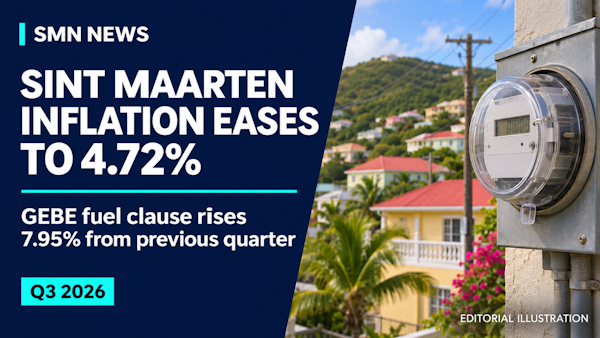
 PHILIPSBURGP:--- Consumer prices in Sint Maarten were 4.72% higher from July through September 2026 than in the same period a year earlier, according to the Department of Statistics (STAT). Annual inflation eased from 5.45% in the second quarter, while prices rose just 0.06% from the second quarter to the third.
The Consumer Price Index stood at 120.52, with 2018 as the base year. The latest figures show that gasoline and diesel prices fell from the previous quarter, even as NV GEBE’s fuel clause continued to climb.
Pump prices fall as electricity costs rise
GEBE’s fuel clause, the portion of the electricity bill that varies with fuel costs, rose 7.95% from the second quarter and was 34.26% higher than a year earlier. The electricity component of the consumer price index rose 4.61% from the previous quarter.
At the pump, gasoline fell 2.94%, and diesel fell 6.26% from the second quarter. Both remained substantially more expensive than a year earlier. Gasoline rose 34.46%, and diesel rose 43.60%.
Overall transport costs fell 1.08% from the previous quarter as vehicle fuel prices dropped 3.91%. Compared with the third quarter of 2025, however, transport costs were 19.03% higher.
STAT links second-quarter fuel surge to Middle East war
STAT attributed the sharp rise in fuel costs earlier in the year to higher global oil prices following the outbreak of war involving Iran, the United States, and Israel on February 28, 2026. Sint Maarten imports its fuel, exposing local prices to changes in the global oil market.
The biggest increases came between April and June, the first full quarter after the war began. Compared with the first quarter, gasoline rose 40.27%, diesel rose 51.20%, and GEBE’s fuel clause rose 27.12%. Annual inflation climbed from 0.66% in the first quarter to 5.45% in the second before easing to 4.72% in the third.
Food prices rise as meat gets more expensive
Food and nonalcoholic beverage prices rose 0.51% from the second quarter and 4.16% from a year earlier. Meat prices rose 2.64% over the quarter, contributing to the increase.
Housing, water, electricity, gas, and other fuels accounted for 36.13% of the consumer price index, the largest share of any spending category. Prices in that group rose 0.70% from the second quarter and 2.48% from a year earlier.
Miscellaneous goods and services fell 0.22% from the previous quarter and 0.54% from a year earlier. STAT reported that personal care prices fell 2.13% over the quarter.