Complaints rose 28 percent in 2025. VROMI and Justice accounted for 33 of the 48 formal investigations, with cases involving stalled permits, enforcement lapses, and a criminal sentence that went unserved because of insufficient prison capacity.
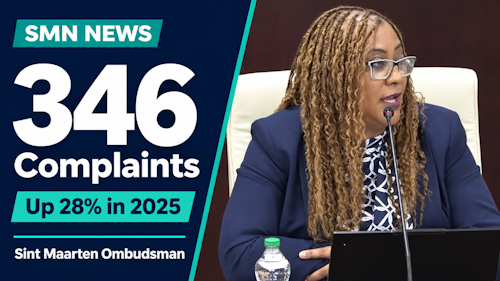 PHILIPSBURG:--- The Ombudsman’s Bureau registered 346 complaints in 2025, up from 270 in 2024, an increase of 76 in one year. The figures presented to Parliament on November 19 show that VROMI was the subject of 21 formal investigations, up from nine the previous year. The Ministry of Justice accounted for another 12. Together, the two ministries made up nearly 69 percent of all formal investigations registered in 2025.
Of the 346 complaints, 298 were handled through what the Bureau calls “information windows,” and 48 led to formal investigations. In information-window cases, the Bureau provides guidance, makes referrals or intervenes without opening a formal investigation. Some of those matters fall outside the Ombudsman’s jurisdiction, and the Bureau directs residents to the appropriate agency or remedy.
The Police Force of Sint Maarten recorded the most information-window cases, with 29, followed by SZV with 25 and the Civil Registry with 15. Immigration and the Tax Office recorded 14 each. In her opening remarks, Ombudsman Gwendolien Mossel said four of the 33 general complaints involving police led to formal investigations. SZV accounted for 28 general complaints, three of which led to formal investigations.
VROMI investigations rise from nine to 21
The Bureau cited prolonged delays in processing building permit applications, inadequate responses to inspection requests, and enforcement shortcomings. In some cases, it found that reports of possible violations were inadequately investigated or followed up. The Ombudsman called for clear enforcement procedures and properly documented inspection findings, warning that the longer a violation continues, the harder it can become to prevent or correct the harm.
Mossel told Parliament that VROMI has led ministries in complaints every year since 2019. She also said that investigations too often end with a final report that receives no meaningful response from the ministry concerned.
Justice complaints include a sentence that went unserved
Among the 12 formal investigations involving Justice, recurring immigration complaints concerned delays in deciding residence permit applications and objections, as well as difficulties using the digital application system.
One complaint concerned a court-imposed criminal sentence that, according to the presentation, was not carried out because of insufficient prison capacity. The Bureau warned that failing to execute a sentence after a victim has gone through the criminal justice process undermines confidence in the system. It also called for legislative attention to compensation awarded to crime victims, particularly when an award exceeds the statutory advance of 5,000 guilders.
Some residents waited about three months just to apply for assistance
The Bureau told Parliament that some applicants for financial assistance waited about three months for an appointment to submit their paperwork. When assistance was approved, the appointment date was generally recorded as the effective date, even if the applicant had been ready to file months earlier. The Ombudsman issued a letter of concern to the Minister of Public Health, Social Development and Labor over the practice.
A separate complaint filed jointly by several school boards exposed problems recruiting teachers from abroad. Residence and work permits and qualification verification required coordination across Education, Justice and VSA. The Bureau used mediation to seek a process the three ministries could apply consistently.
The same three failures have ranked among the most common since 2021
Poor organization of services, inadequate communication and delays were the three standards of proper conduct most frequently violated in 2025. The Bureau said those same shortcomings have consistently ranked among the most common since 2021.
The Ombudsman closed 29 cases during 2025, including seven resolved at the intervention stage, and issued 67 recommendations. The Bureau told Parliament that government entities have three months under the National Ombudsman Ordinance to implement recommendations or provide a substantive explanation for declining to do so.
For residents, the consequences are concrete. A building project can sit idle while a permit application goes unanswered. A person seeking financial assistance can wait months for the chance to apply. The rise from 270 to 346 complaints puts a number on how often people turned to the Ombudsman for help. The repeat findings show where government has had years to improve.