The Caribbean’s greatest export is talent. It’s time to stop giving it away.

by Cdr. Bud Slabbaert

They leave the Caribbean for a reason. Not because of a lack of love for home, but to pursue growth. They want to learn more, see more, become more. They earn degrees, skills, networks, and experience that the world respects. They prove themselves in foreign systems that don’t realize their real worth. Because ultimately there is one place where everything they’ve learned matters more than anywhere else, back home.

Here, their talent can be amplified and thrive, sparking change and introducing new ideas. The Caribbean needs them to return now, so they can build what isn’t possible elsewhere, apply their experience, and create opportunities for themselves, their families, and their island. They can be the person they left to become. They can develop the things they once wished existed. The world prepared them; the Caribbean awaits their impact not someday, but today.

The Caribbean produces world-class talent, but exports it for free. The region is not short of talent. It is short of the systems that let talent shine. The problem is not the students. It may be the curriculum. It could not just change their life. It can change the future of the Caribbean. The region is at a moment where a new kind of higher‑learning institution could become a magnet for local talent, diaspora returnees, and international students who want something they can’t get anywhere else.

The region needs systems that match its children's brilliance and potential. The Caribbean doesn’t lack genius talent. It lacks the environment to unleash and foster it. The region needs something categorically different, that fills the gaps that other institutions don’t touch. With rapid global change, stronger, more innovative institutions are essential—perhaps a Pan‑Caribbean Applied Sciences & Innovation Institute to fill these critical spaces.

Nations that invest in research grow three times faster than those that do not. The Caribbean should create Research and Development (R&D) institutes and laboratories. The Caribbean, is strategically important but is the most under-researched and under-innovated region. It should establish R&D institutes to drive transformation and prosperity. It is not a luxury; it’s a regional survival strategy and of global relevance. It is not just about science; it is the armament that changes the region’s destiny.

Brain drain is a major issue for the region, causing a loss of talent and leadership. Instead of sending its brightest minds abroad, the region should focus on building research industries. The next billion-dollar Caribbean Industry Isn’t tourism. It’s research. With proper labs, the local talent of the region could make a global impact.

R&D institutes help local industries innovate, shifting regions from importing solutions to creating their own. Establishing these centers encourages diaspora engagement and reduces reliance on tourism by diversifying the economy. It may be the single most transformative step to be taken.

Research and Development serves as a profit center, driving Caribbean technology development, attracting international partners, and creating skilled jobs. It can reduce vulnerability; each hurricane season costs billions, but research could cut losses by half. Relying on imports often delays local innovation and fails to address unique island needs.

Many students who go abroad do not return, not just for better jobs or higher pay, but because their home region often lacks industries, job openings, or research environments in their fields. They stay where their qualifications are valued, with stronger industries, more funding, advanced technology, and supportive networks. Foreign universities offer better technology, networks, and research culture. This region lacks the labs or R&D centers found overseas.

Also, mind the social integration abroad. During several years of study, they build friendships and form relationships. Returning may become emotionally and socially difficult.

Students who pursue degrees abroad are encouraged to return home not solely out of obligation, but to assume leadership roles. Their decision to come back should be driven by readiness and ambition. By ensuring that returning is appealing, and by providing graduates with meaningful and irresistible opportunities that motivate them to contribute upon their return.

The message to them is: “You leave the Caribbean to study; you don’t leave because you stopped loving home. You leave because you want to grow. Your island needs what the world teaches you and prepares you for. It needs you to return because you can build what only you can build and it may be something here that you could never build anywhere else. When you have grown. You’ve earned skills, networks, and experience that most people only dream of, there is one place where those skills matter more than anywhere else on Earth. Home.”


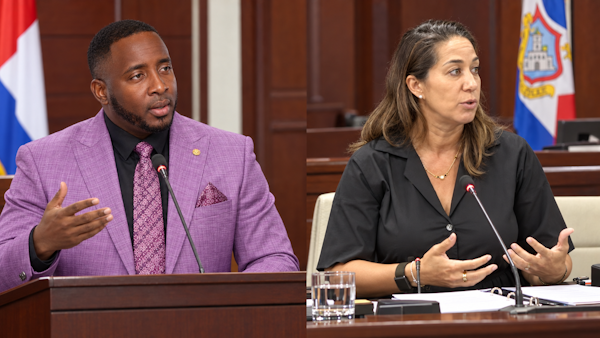
Continuation Urgent Public Meeting of Parliament for deliberations on issues surrounding the Central Bank of Curaçao and Sint Maarten.

PHILIPSBURG:---  The House of Parliament will sit in an urgent Public meeting on January 12, 2026.

The Public meeting was adjourned on January 9, 2026, and will be reconvened on Monday at 14.00 hrs. in the Legislative Hall at Wilhelminastraat #1 in Philipsburg. The Minister of Finance will be in attendance.

The agenda point is:
Deliberations on the issues surrounding the Central Bank of Curacao and Sint Maarten
a. The recent nomination of the Chairman of the CBCS by the Council of Ministers
b. An update on the ENNIA situation
c. Developments concerning Mullet Bay (IS/092/2025-2026 dated September 22, 2025)

This meeting was requested by MP E.J. Doran, MP A.M.R. Irion, MP D.T.J. York, MP O.E.C. Ottley and MP F.A. Lacroes.

The Minister will be returning to answer questions posed in the second round.

Members of the public are invited to the House of Parliament to attend parliamentary deliberations. All persons visiting the House of Parliament must adhere to the house rules.

The House of Parliament is located across from the Court House in Philipsburg.

The parliamentary sessions will be carried live on TV 15, Soualiga Headlines, via SXM GOV radio FM 107.9, via Pearl Radio FM 98.1, the audio via the internet www.youtube.com/c/SintMaartenParliament and www.pearlfmradio.sx

PUBLIC NOTICE.

The management of SVOBE schools (Milton Peters College and Sundial School) would like to remind the parent(s)/guardian(s) of 5th and 6th grade students (Group 7 & 8) at primary schools about the upcoming Q&A information session for prospective students of the SVOBE schools.

Date: Tuesday, January 13, 2026
Time: 6:30 PM
Location: Milton Peters College

During this session, representatives from both schools will provide valuable information about the education offered at the SVOBE schools (Sundial School and Milton Peters College). Parents and guardians will have the opportunity to ask questions and receive answers to help them make well-informed decisions when completing the Educational Report.

We look forward to welcoming you on Tuesday, January 13, 2026, at 6:30 PM at Milton Peters College.

Local fishermen receive new gear after completing environmental workshops.

fishermen09012026PHILIPSBURG:---  A handful of local fishermen on Sint Maarten are starting the new year in 2026 with new boat equipment and fishing gear. The non-profit Nature Foundation Sint Maarten is pleased to announce that four fishermen recently completed a workshop series designed to support efforts towards sustainable local fishing. As thanks for their time and commitment, each graduate received a one-time purchase order for equipment or services of their choice.

The compensation program began in August 2025 with a welcome dinner, followed by three workshops, gear training, and ongoing collaboration throughout the year. Developed jointly by the Nature Foundation and local fishers, the sessions focused on practical tools and knowledge exchange. Topics included sustainable fishing practices, responsible use of Fish Aggregation Devices (FADs), and creating a cultural archive of Sint Maarten’s fishing heritage. A special emphasis was placed on the importance of sharks and rays to the marine ecosystem, and ways to help prevent negative interactions with them. Regional fisheries experts from Anguilla and Statia also joined the workshop as guest speakers.

“Marine conservation and fisheries are often pitted against one another, but you can’t have one without the other. Healthy oceans support fish stocks and fishers’ livelihoods, and their knowledge and involvement are essential to caring for our marine resources,” said Nadya de Wolf, Marine Policy and Outreach Fellow. “We’re grateful to the fishers who allowed us to show our support and respect for the fishing community and have been working with us. This program is just a first step, and we hope it opens new doors.”

After completing the program, participants could request up to USD 1,500 in pre-approved equipment. Items included fishfinders, marine machinery, and wire rolls for fish pots. Each fisherman also received a custom 3D-printed gauge to measure legal and recommended sizes for queen conch and Caribbean spiny lobster to help ensure sustainable harvests.

The Nature Foundation is planning a second round of workshops and funding opportunities in 2026. Small bonuses will reward innovative practices, such as adding “escape slots” to fish traps. Recruitment will again take place through flyers, word-of-mouth, and visits to the Simpson Bay Fish Market and Great Bay harbor. Interested individuals should reach out to the Project Manager at This email address is being protected from spambots. You need JavaScript enabled to view it. or send a WhatsApp message to +1 (721) 581-6365 to determine their eligibility.

The initiative is part of the MENAA (Marine Elasmobranch Nursery Area Advocacy) project at the Nature Foundation. MENAA seeks to form a foundation for the success of Sint Maarten’s marine and coastal area, particularly for sharks and rays. Research shows local waters serve as a nursery for species like tiger sharks, Caribbean reef sharks, and spotted eagle rays. These animals are crucial for reef health and fishery stability but remain threatened by poaching and ghost nets, despite local protections.

MENAA is funded by BESTLIFE2030 (Biodiversity and Ecosystem Services in Territories of European Overseas), a granting mechanism focusing on preserving and restoring biodiversity in the EU’s outermost regions (ORs) and Overseas Countries and Territories (OCTs), which host rich biodiversity but also face significant climate change threats.

Co-funded by the European Union. Views and opinions expressed are, however, those of the author(s) only and do not necessarily reflect those of the European Union or CINEA. Neither the European Union nor the granting authority can be held responsible for them.

Historic Win for Financial Fairness: MP Francisco A. Lacroes’ Motion Carried Unanimously in Parliament.

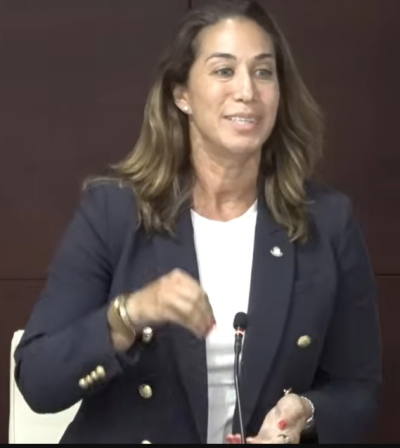
franciscolacroes14012025PHILIPSBURG:--- In a landmark move for banking reform and consumer protection, Parliament today unanimously adopted a motion by MP Francisco A. Lacroes to overhaul the basic payment account framework. This decisive vote follows through on an initiative first tabled during the 2025–2026 parliamentary year and signals a new era of financial inclusion for Sint Maarten.
From Advocacy to Action On October 30, 2025, MP Lacroes introduced the motion after intense debate with the responsible minister, highlighting the urgent need to modernize outdated deposit caps that no longer reflect real-life financial needs. The proposal underscored a shared commitment: the basic payment account must be more than a token gesture; it must work for workers, families, and small businesses. At the time, MP Lacroes framed the initiative as part of his broader campaign for fairness in the banking sector, calling out restrictive thresholds that penalized low and middle-income earners. “Financial inclusion isn’t optional, it’s a right,” Lacroes stated in public remarks last year.
Today’s vote is a clear mandate with unanimous support. Parliament has now instructed the government and regulators to raise the deposit limit and revamp the implementation guidelines. This is not just a technical adjustment; it is a game-changer for thousands of residents who rely on basic accounts for salaries, bill payments, and savings.
The official voting record will be published shortly, but today’s outcome already sends a clear message: affordability and access to banking services are now recognized as core policy priorities.
What’s next, the government must now act. Regulators are tasked with consulting the banking sector, drafting new regulations, and reporting back to Parliament on timelines and any necessary legislative adjustments. Once implemented, the changes will allow account holders to manage their finances without running into unrealistic caps, reducing fees, and strengthening the financial resilience of households and small businesses. Bigger picture: This victory aligns with MP Lacroes’ 2025 agenda on economic fairness, which has also addressed cost-of-living pressures, the energy transition, and budget policy. Today’s motion is more than a banking reform; it is a clear statement that Sint Maarten is serious about protecting consumers and strengthening its economy.


Subcategories