





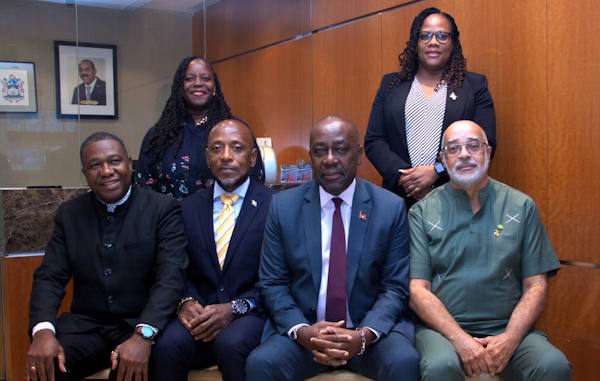
 NEW YORK:--- Antigua and Barbuda has taken the chair of the Organization of Eastern Caribbean States (OECS) Council of Ministers of Foreign Affairs, as members seek closer cooperation on trade, transport, climate finance and diplomacy.
Foreign ministers and other representatives met in New York on September 20, on the sidelines of the 81st United Nations General Assembly. During the meeting, St. Vincent and the Grenadines’ Foreign Affairs and Trade Minister, D. Fitzgerald Bramble, handed the chairmanship to Antigua and Barbuda’s Foreign Affairs Minister, E.P. Chet Greene.
Greene called for stronger air links between the islands, regular sea transport for passengers and cargo, and better connections to markets in Central and South America. Governments can set policy, he said, but transport operators, ports, businesses, financial institutions and investors must help develop services that can last.
The new chair also urged the OECS to use foreign policy to advance its members’ economic interests. Priorities discussed included protecting the OECS Economic Union, seeking fair treatment for citizenship-by-investment programmes and financial services, expanding access to climate finance, and defending international law and cooperation between nations. Ministers agreed to strengthen the OECS Commission’s ability to coordinate and carry out diplomatic work.
Outgoing chair Bramble warned that established assumptions about the international system are being challenged, increasing the need for a more united regional approach. OECS Director General Dr. Didacus Jules likewise called for diplomatic institutions that can respond to rapid global change.
For Saint-Martin, an OECS member, the discussions on island transport, market access and climate funding have direct regional relevance. The release says representatives from across the organization attended but does not identify a Saint-Martin delegate or announce a specific new transport service or funding agreement.
The ministers agreed to hold a dedicated retreat before the end of 2026 to refine the organization’s foreign-policy priorities and its response to the changing international environment.