





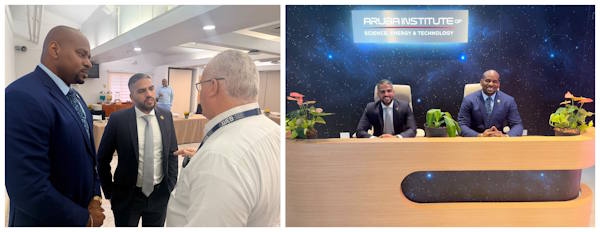
 Oranjestad, Aruba:--- Members of Parliament Omar Ottley and Viren Kotai used their attendance at the Parlatino convention in Aruba this week to look beyond discussion and explore practical solutions that could benefit the people of St. Maarten.
On Thursday, September 24, the MPs visited Aruba’s water and electricity utility, WEB, where they received an in-depth presentation on the country’s energy operations, sustainability goals and plans for the future.
The visit was particularly significant given ongoing concerns about the cost of electricity in St. Maarten. Rather than viewing Aruba’s model as something that can simply be copied, the MPs approached the meeting as an opportunity to learn, ask questions, and determine what lessons could realistically be adapted to St. Maarten’s circumstances.
One area that immediately sparked their interest was Aruba’s approach to electricity pricing.
While Aruba’s base electricity rate of approximately 37 cents per kWh appears higher than St. Maarten’s base rate of approximately 25 cents per kWh, WEB officials explained that the comparison does not tell the full story. Aruba’s rate already incorporates fuel costs, while consumers in St. Maarten are charged an additional fuel clause on top of the base electricity rate.
WEB representatives explained that Aruba previously charged fuel costs separately but subsequently changed its approach, incorporating those costs into its rate structure and eliminating a separate fuel surcharge.
The potential impact on consumers was illustrated using an actual GEBE bill presented during the discussion. The St. Maarten bill reflected consumption of 867 kWh at 0.25XCG, with a total charge of approximately XCG 671.84, including a fuel clause of XCG 425.84.
Using the figures presented during the WEB meeting, 867 kWh of consumption at Aruba’s approximate rate of XCG 0.37 per kWh, plus a standard connection fee of XCG 12.50, would total approximately XCG 333.29.
For MPs Ottley and Kotai, the comparison raised an important question: What can St. Maarten learn from Aruba to reduce the burden on households and businesses?
WEB officials stressed that continued heavy dependence on heavy fuel oil leaves electricity costs vulnerable to increases in global fuel prices. The company therefore emphasized the importance of changing long-term operational strategies and steadily moving toward alternative, sustainable energy sources.
Another area of significant interest was Aruba’s use of fuel hedging to manage exposure to fluctuations in international fuel prices. The strategy can provide greater predictability and protection against sudden increases in fuel costs, helping to safeguard both the utility and, ultimately, consumers.
MP Ottley said participating in regional forums should extend beyond attending meetings and returning home. Where another country has found a method that appears to work for its people, St. Maarten should be willing to listen, learn and investigate whether elements of that approach can work at home.
“We do not have all the answers, and we should never pretend that we do. If our neighbors are doing something that is producing better results for their people, then it is our responsibility to sit with them, understand how they got there and determine what we can take back home,” Ottley said.
“Our people are feeling the pressure of high electricity bills every month. If there are policies, financial strategies, legislative changes or alternative-energy solutions that can help ease that burden, then we owe it to the people of St. Maarten to do the research and pursue them,” Kotai said.
Both MPs committed to remaining in contact with WEB, conducting further research and examining what legislative or policy changes may be required to help St. Maarten address its ongoing energy challenges.
For Ottley and Kotai, the Aruba visit was not about suggesting that one meeting will solve St. Maarten’s energy problems. It was about being willing to learn from a neighboring country, asking difficult questions, and returning home prepared to do the work necessary to turn those lessons into possible solutions.