Vinaora Nivo Slider 3.xVinaora Nivo Slider 3.xVinaora Nivo Slider 3.x

St Maarten’s Newest Cohort of Correctional Officers Completes First Phase of Induction Training.

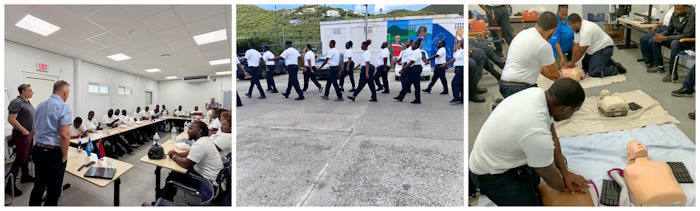
prisonofficerstraining23112026PHILIPSBURG:--- Twenty-two newly recruited correctional officers in Sint Maarten completed the first phase of their induction training on 6 November, following three weeks of classroom-based instruction.

New recruits received training across 25 topics covering essential aspects of professional correctional practice, delivered by international prison experts and local professionals specializing in physical and mental health and emergency response. Topics included prison security, communication, professional ethics, human rights, incident management, first aid, mental health awareness, suicide and self-harm prevention, and rehabilitation and reintegration.

Following the classroom-based training, recruits continued their preparation between 6 and 20 November through independent study, clarification sessions and self-directed physical training. This period also included supplementary sessions delivered by Point Blanche Prison staff and through UNODC global e-learning courses covering the Nelson Mandela Rules, basic correctional duties, prisoner classification and investigative interviewing. Together, these activities allowed recruits to consolidate the knowledge acquired, deepen their understanding of key correctional concepts and maintain their physical readiness ahead of the practical training phase

The second phase, beginning on 23 November, will focus on practical security procedures through demonstrations, drills and supervised exercises. Training will cover searches and inspections, prisoner supervision and movement, radio communication, access control and security reporting, alongside the safe and lawful use of force and restraints.

Practical exercises will include handcuffing, physical intervention, team-based restraint, breakaway and self-defense techniques, emphasizing safety, accountability, and adherence to authorized procedures. These activities will help recruits develop the skills and confidence required to perform their duties safely and professionally.

Recruiting and training new correctional officers are key steps toward addressing staffing shortages, strengthening the Prison's operational capacity, and preparing a qualified workforce for the transition to Sint Maarten's new correctional facility.

The Ministry of Justice of Sint Maarten leads the Detention Sector Reform Program (DSRP), under which the induction program is implemented. Point Blanche Prison delivers it in partnership with the United Nations Office on Drugs and Crime (UNODC), with contributions from international correctional experts, regional partners from Curaçao, and local professionals specializing in health and emergency response.


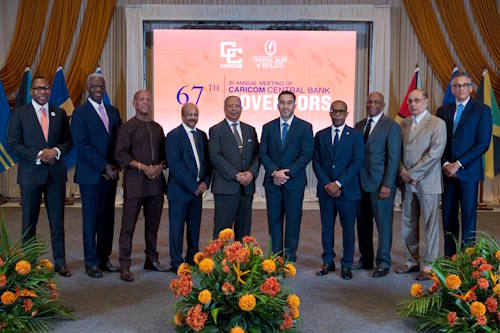
67th Bi-Annual Meeting of CARICOM Central Bank Governors.

centralbank23112026BELIZE CITY, BELIZE:---  The Central Bank of Belize hosted the 67th Bi-Annual Meeting of the CARICOM Central Bank Governors from
19 to 20 November 2026, at the Fort George Belize, Autograph Collection, in Belize City. Chaired by Governor Kareem Michael, the meeting brought together Governors, Deputy Governors, and senior central bank officials from across the Caribbean to deliberate on regional economic developments and
initiatives aimed at strengthening financial resilience, deepening regional cooperation, and supporting sustainable economic growth.

The meeting was held under the theme, “From Vulnerability to Capacity: Recalibrating Policy and Growth Drivers in Small States amid Global Shifts.” The theme framed the discussions on the inherent vulnerabilities faced by small open economies and the importance of strengthening policies,
institutions, and regional frameworks to enhance resilience, absorb global shocks, and improve conditions for sustainable economic development.
Governors noted that small open economies continue to face challenges arising from global economic uncertainty, climate-related risks, and rapid technological change. Governors also approved measures to strengthen regional data and research capabilities, including a framework to improve the
consistency, comparability, and timeliness of regional statistics.

Governors endorsed the development of a strategic roadmap to accelerate interoperable payments across the region, to be led by the Bank of Jamaica with support from the Eastern Caribbean Central Bank. They reaffirmed payment system modernization as a key pillar of regional financial integration
and economic development.

Governors received a presentation from the Pan-African Payment and Settlement System (PAPSS) on its governance framework, operating model, and payment solutions, which provided useful insights into regional approaches to cross-border payments and settlement in local currencies.
Governors also received a status update on the pilot of the CARICOM Payment and Settlement System (CAPSS) and agreed that potential pilot banks in the participating countries will soon be approached to take part. The meeting also reviewed progress on regional initiatives aimed at strengthening
resilience and cooperation, including the Caribbean Regional Green Taxonomy, macroprudential policy development, and cybersecurity collaboration. The discussions underscored the importance of building technical expertise and institutional capacity across Caribbean central banks.

Governors also received a presentation on the proposed School of Central Banking and Monetary Policy, a joint initiative of the Central Bank of Barbados and the University of the West Indies, Cave Hill Campus. The initiative is intended to strengthen regional central-bank capacity through training
designed around the practical policy, supervisory, technological, and institutional challenges faced by small states in the Caribbean. The 67th Meeting was held alongside the 57th Annual Monetary Studies Conference (AMSC), where Dr. R. Brian Langrin (Bank of Jamaica), Mr. Larry Howai (Central Bank of Trinidad & Tobago), and Dr. The Most Honorable Kevin Greenidge, F.B. (Central Bank of Barbados) participated in the Governors’ panel discussion, moderated by host Governor Kareem Michael (Central Bank of Belize).

At the close of the meeting, Governors reaffirmed their commitment to deepening regional collaboration, strengthening policies, enhancing institutional capacity, and advancing initiatives that promote sustainable growth amid an increasingly uncertain global environment.
The Governors will reconvene in May 2027 for the 68th Bi-Annual Meeting of the CARICOM Central Bank Governors under the chairmanship of Dr. Gobind Ganga, Governor of the Bank of Guyana.

Youth Conference 2026 Puts Children's Voices at the Centre of Policy Development

Department of Youth Marks International Day for the Rights of the Child with Youth Participation, Research and Recognition of Child Protection Advocates
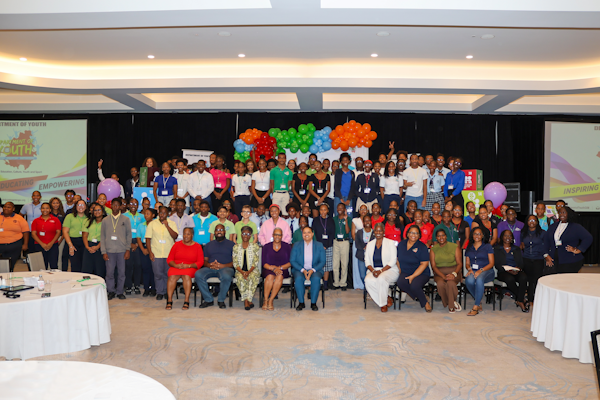
youthconferrence23112026PHILIPSBURG:---  As Sint Maarten observes the International Day for the Rights of the Child on November 20, the Department of Youth, within the Ministry of Education, Culture, Youth and Sport (MECYS), has brought together young people from across the country for its 2026 Youth Conference at the JW Marriott Hotel, placing meaningful youth participation at the forefront of this year's activities.

The conference, themed "Equipped to Learn," is the main event of this year's observance under the overarching theme "Empowering Children's Voices." Approximately 100 young people representing educational institutions, youth organizations, and youth representative bodies across Sint Maarten are participating in discussions on issues affecting their lives and developing recommendations to inform the review of Sint Maarten's Integrated Youth Policy.

A central feature of the conference is the presentation and validation of findings from youth-led research and Youth Dialogue Sessions, including 569 Child Friendly City Checklist surveys administered by ten trained youth researchers. Young volunteers have also played an active role in planning and organizing the event, gaining valuable leadership and organizational experience while helping shape a conference centered on their own voices and perspectives.

The conference also featured the signing of a Youth Declaration, bringing together the priorities and aspirations of Sint Maarten's young people. The Declaration marks an important step toward ensuring youth perspectives are not only heard but meaningfully reflected in discussions and decisions about their future.

These initiatives reflect the Ministry’s commitment to strengthening youth participation in government decision-making. A significant milestone was achieved on June 9, 2026, when the Minister of Education, Culture, Youth and Sport, the Honorable Melissa D. Gumbs, approved the Youth Participation Policy Framework.

The framework establishes a structured approach for young people to contribute to the development and implementation of policies across ministries. It creates opportunities for them to identify priorities, share ideas and help shape solutions to issues affecting their lives and future.

Reflecting on the importance of meaningful youth participation, Minister Gumbs emphasized that recognizing children's voices must extend beyond words and translate into action.

"It's not enough to tell children that their voices matter. We must demonstrate that they do, through our actions. That means creating opportunities for children to speak, listening without dismissing their concerns, and ensuring that their perspectives help shape the decisions we make. Our young people are not simply the leaders of tomorrow. They are already valuable members of our society, and their ideas and experiences deserve to be heard and taken seriously today."

Another priority has been strengthening awareness and practical understanding of the United Nations Convention on the Rights of the Child (UNCRC). Capacity-building sessions introduced in early November have engaged representatives of NGOs, community schools, after-school programs, teachers, and youth leaders, focusing on the practical application of children's rights, responsibilities, and safeguarding principles.

These training initiatives are expected to continue and expand into 2027, reaching additional NGOs, youth-serving organizations, and elementary and secondary schools throughout Sint Maarten. The aim is to equip those who work directly with children with the knowledge and tools to recognize, protect and promote children's rights in their everyday interactions.

The Department also encourages young people to recognize the important role they play in building a stronger, more respectful society. By respecting the rights and dignity of others, taking pride in their communities and country, and caring for their environment, young people can make a positive difference through their everyday choices and actions.

In recognition of the International Day for the Rights of the Child, the Department also extends its heartfelt congratulations and appreciation to all youth workers, caregivers, safety net providers, police and child protection officers, educators, parents, families, volunteers, and everyone dedicated to safeguarding the rights and well-being of children and young people on Sint Maarten.

Much of this work takes place quietly, away from public attention, but its impact is invaluable. Through their dedication, these individuals help turn children's rights from principles on paper into meaningful protection, care and opportunities for children to grow, develop and thrive.

As Sint Maarten marks this important day, the message remains clear: empowering children's voices means more than simply giving them an opportunity to speak. It means listening, taking their contributions seriously, and ensuring they have a genuine role in shaping decisions that affect their lives.

Through initiatives such as the Youth Conference and the Youth Participation Policy Framework, the Department of Youth continues to advance a Sint Maarten where young people are not simply regarded as the leaders of tomorrow, but recognized as valued contributors to the society we are building today.


Theo Heyliger ready to get back behind the wheel, floats ‘We the People of St. Maarten’.

The United People’s Party founder says he would run under a new banner and predicts that the parties in the governing coalition will struggle to hold their seats.

theoheyligersos23112026PHILIPSBURG:---  Theo Heyliger says he is ready to return to electoral politics. In an interview with Billy D. Hamlet on SOS Radio following his release from Point Blanche prison, the former commissioner, minister, and member of Parliament floated “We the People of St. Maarten” as the name of a new party and said he would be ready to run if an election were held tomorrow.
Heyliger founded the United People’s Party, but said it no longer reflects his original vision. Asked whether he would return under a different banner, he answered, “New name, new party.” He gave no launch date or candidate list during the interview.

Heyliger said he remains willing to work with other party leaders. He said any such discussions would have to focus on what a government would accomplish and how it would hold ministers accountable. He criticized negotiations centered on who gets which portfolio and said he had written down ideas while incarcerated that he would like the opportunity to put into practice.

Heyliger predicts coalition losses

Looking toward the 2028 election, Heyliger predicted that none of the parties in the current governing coalition would gain seats and that the coalition parties would likely lose ground. He said the larger opposition party could gain seats, while the other opposition party could hold its position or lose ground. At one point he suggested two or three parties might fail to return to Parliament, without identifying them.

Heyliger argued that too many parties are involved in the current government and that competing priorities have slowed decision-making. He dismissed suggestions that he had been working from prison to bring down the government, joking that he would have had to do it by pigeon. His prediction concerned what voters might do at the next election.

The interview also turned to his conviction. Heyliger apologized to the public “for what they accused me of doing” while continuing to dispute how the case was handled. He said he wanted to test at the polls whether voters still support him after his years away from public office.

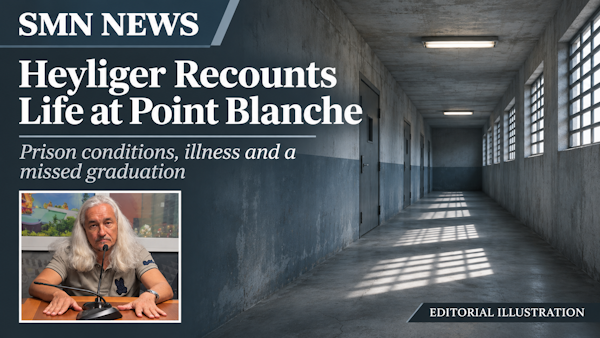
Mold, a leaking cell and a graduation he missed — Theo Heyliger recounts life at Pointe Blanche.

theosprisonlife23112026PHILIPSBURG:--- Theo Heyliger says the hardest moment of his imprisonment came when he was denied permission to attend his son’s high school graduation. In an SOS Radio interview after his release, he described asking for an hour or two outside Point Blanche prison under guard so he could see his son graduate and tell him he was proud of him.


Heyliger said he wrote to the prison director, who forwarded the request to the minister. He recalled receiving a reply about a week later saying he had not yet served 50 percent of his time in custody and therefore could not attend. Heyliger said some guards had offered to accompany him. The minister’s decision and the reason given were described by Heyliger during the interview.

“I just wanted to hug him,” he said, recalling what he called the most painful moment of his time in prison. He said his wife visited nearly every Sunday while carrying the day-to-day responsibilities of raising their children.

Rain came through the ceiling

Heyliger said he initially shared a cell with four other men and complained that it was too small for that many people. He said there was mold on the ceiling and recalled waking one night as rain leaked onto his head. He disputed suggestions that he had been housed in an air-conditioned cell or received privileges unavailable to other prisoners.

He said he asked for work soon after arriving and was assigned to the prison canteen and library about two months later. Walking, exercising, and keeping notes helped him manage the hours of confinement. He also recalled helping prisoners write letters to the director and the minister.

Heyliger described Point Blanche as dangerous for prisoners and staff alike. He recalled a fight breaking out after a Christmas church service and spoke about the disruption caused by a fire at the facility. He thanked the officers who looked out for him and said prison staff were undervalued and underpaid.

Hospital scan found an intestinal perforation, Heyliger says

Heyliger said he put off reporting abdominal pain for about three days because he dreaded the rough ride in the prison transport van. After his cellmate alerted officers, he said staff took him to see a nurse and arranged more suitable transport with three guards.

A doctor sent him to the hospital, where, according to Heyliger, a CT scan revealed a perforation in his lower intestine. He said doctors weighed immediate surgery against treatment with antibiotics and that he remained in the hospital under guard for several days. He said his wife raised the possibility of treatment in Colombia, but he chose to stay and return to prison.

Heyliger called for consistent basic English, math, and anger-management classes. He said he encountered young men who struggled to read and write. He also proposed using the prison kitchen and sewing facilities to prepare school meals and make uniforms, with incentives for participating prisoners.


Subcategories

Vinaora Nivo Slider 3.x
Vinaora Nivo Slider 3.xVinaora Nivo Slider 3.x
Vinaora Nivo Slider 3.x