




~Businesses report disputed credit-card transactions, chargebacks and disruptive incidents; Minister asks SHTA for evidence before government considers policy response.~
 PHILIPSBURG:--- The Ministry of TEATT has begun gathering information from hotels, restaurants, retailers, banks and other businesses to determine whether reported problems involving disputed credit-card transactions, chargebacks, possible fraudulent activity and disruptive visitor behavior represent isolated incidents or a broader pattern requiring government action.
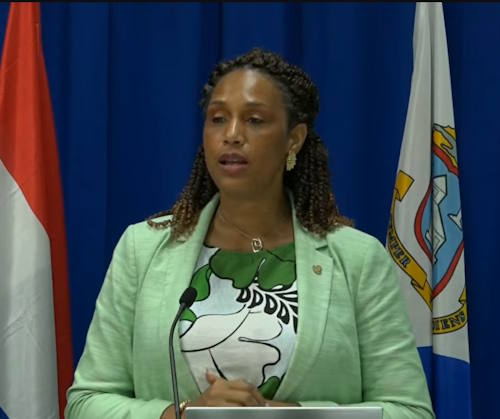
Minister Grisha Heyliger-Marten disclosed Wednesday that she has formally requested detailed written feedback from the St. Maarten Hospitality and Trade Association (SHTA) as government examines a broader question: Is St. Maarten's current tourism model generating sustainable economic value for the country?
The Minister stressed repeatedly that the exercise is not aimed at stigmatizing any nationality, ethnicity or visitor market and said government policy will not be based on rumors or social-media commentary.
“There are no good tourists and bad tourists. There are no high-quality visitors and low-quality visitors,” Heyliger-Marten said.
“Every visitor who chooses St. Martin deserves to be treated with dignity and respect.”
She also warned against judging an entire visitor market based on the actions of a few individuals.
But the Minister said refusing to stereotype visitors does not prevent government from asking difficult economic questions.
Among those questions are whether tourism is generating sustainable value, whether local businesses are benefiting, whether quality employment is being created and whether St. Maarten is maximizing the economic opportunities generated by tourism.
Those, Heyliger-Marten said, are legitimate policy questions being asked by successful tourism destinations around the world.
Businesses Report Chargebacks and Possible Fraud
The strongest revelation came when Heyliger-Marten confirmed that segments of the private sector have raised concerns with her ministry.
Business owners have reported disputed credit-card transactions and chargebacks that they believe may involve fraudulent activity.
Others have reported disruptive behavior, public altercations, and incidents that negatively affect customers' experiences and St. Maarten's reputation.
The Minister stopped short of concluding that these reports demonstrate a broader trend.
“If these incidents are isolated, then they should be treated as isolated incidents,” she said.
However, if objective evidence demonstrates recurring patterns, she said government has a responsibility to understand them and determine whether policy responses are necessary.
Heyliger-Marten was equally explicit about what will not form the basis for government policy.
“It will never unfairly stigmatize an entire nationality, ethnicity, or visitor market because of the behavior of a few individuals. We will follow the facts. Nothing more, nothing less.”
SHTA asked for Data
The Minister has therefore formally requested detailed written feedback from SHTA.
The association has been asked to provide information about the types of incidents businesses are reporting, how frequently they occur, which sectors are most affected, and what measures businesses have already implemented.
TEATT is simultaneously engaging hoteliers, restaurants, retailers, financial institutions, banks and other stakeholders to develop what Heyliger-Marten called a complete picture of what is actually occurring.
The eventual policy implications could be significant, depending on what that information shows.
Heyliger-Marten said the objective is to protect legitimate businesses against fraud and abuse while ensuring legitimate consumer complaints are treated fairly.
The larger goal, she said, is a tourism strategy driven not by emotion or social media but by evidence, partnership and long-term economic sustainability.
The Minister also acknowledged the important contribution visitors made during St. Maarten's recovery from Hurricane Irma and the COVID-19 period, saying their contribution should never be forgotten.
But she signaled that the country's tourism policy is entering a different phase.
“Growth alone is no longer enough,” Heyliger-Marten said, arguing that the objective must now be sustainable growth that creates greater value for St. Maarten's people, businesses and economy.