





~Former Finance Minister challenges Cg. 39 million Q1 surplus, says Cg. 27 million came from underspending rather than execution; questions 20% travel increase, unpaid vendors, AI governance, procurement, civil-service benefits and absence of direct GEBE relief.~
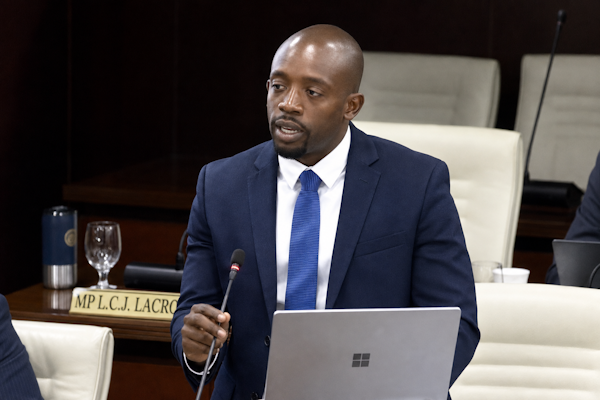 PHILIPSBURG: --- Opposition Member of Parliament and former Minister of Finance Ardwell Irion launched a sweeping attack on Government’s draft 2026 National Budget Friday, arguing that ministers are presenting ambitious plans more than seven months into the fiscal year without showing Parliament what has actually been executed, what remains affordable, and what residents can realistically expect before December 31.
Irion’s intervention stretched across virtually every major weakness exposed during the budget debate: the reported first-quarter surplus, delayed projects, unpaid vendors, GEBE relief, rising travel expenditure, civil-service benefits, Government procurement, artificial-intelligence use, revenue-generating measures and the continued use of outdated financial data.
His central criticism was that Government is presenting the 2026 Budget in August as though the country were still at the beginning of the year.
According to Irion, what Parliament needed to see was not another list of annual ambitions, but specific deliverables for September, October, November and December, backed by current financial information and measurable execution deadlines.
The former Finance Minister accused Government of creating “hype and hope” while repeatedly failing to translate promises into results on the ground.
Irion Challenges Cg. 39 million Surplus Narrative
One of Irion’s strongest financial attacks concerned Finance Minister Marinka Gumbs’ presentation of the preliminary first-quarter 2026 result.
Gumbs had presented a surplus of approximately Cg. 39 million, while explaining that the result was driven partly by higher revenue but significantly by lower-than-budgeted expenditure.
Irion seized on that distinction.
He argued that Government should not present the surplus as purely positive when a major portion resulted from money not being spent as planned.
“The reason why we have this surplus is because of less expenditure,” Irion said, interpreting the result as evidence that Government had failed to execute activities programmed for the first three months of the year.
His criticism tracks the Finance Minister’s own presentation, which stated that approximately Cg. 27 million of the favorable Q1 variance resulted from expenditure remaining below budget, while roughly Cg. 9 million came from higher revenue.
For Irion, that means Parliament must distinguish between a surplus created by strong revenue performance and one created because Government had not yet executed planned expenditure.
He questioned how Government could simultaneously point to tens of millions of guilders in favorable results while ministries complain about inadequate resources and vendors reportedly await payment.
“Do we have a surplus, or don’t we have a surplus?” Irion asked.
Former Finance Minister demands Q2 Report
Irion also challenged Government to present an August budget debate using financial information largely reflecting the first quarter ending March 31.
He demanded the second-quarter report, arguing that Parliament cannot properly judge Sint Maarten’s present fiscal position using figures that are several months old.
“We are now in the third quarter,” Irion said, asking that Parliament receive the Q2 report before the second round of the debate or, at minimum, updated financial data showing Government’s current position.
His criticism goes to the heart of the extraordinary timing of the 2026 Budget.
Parliament is debating the annual Budget in late August. With only several months remaining in the year, Irion argues that Government should show actual 2026 execution, rather than simply repeat plans originally developed for a full 12-month fiscal period.
“What I would have wanted to see,” he told Parliament, was a schedule explaining what Government will execute during the remaining months of the year and what will instead move into Budget 2027.
Irion: Vendors Hear “Surplus” While Waiting to Be Paid
Irion also raised an uncomfortable contradiction between Government’s positive fiscal presentation and complaints over payments to suppliers.
He said vendors are reportedly awaiting Government payments while simultaneously hearing public statements that the country has recorded a multimillion-guilder surplus.
Irion characterized that situation as insulting to businesses that have already performed work for Government but remain unpaid.
“You have a stack of vendors that can’t get paid,” Irion said, questioning how that can be reconciled with the favorable fiscal figures being presented.
The transcript does not establish the total value of outstanding vendor invoices or how many are overdue. Those figures remain questions Government would have to provide.
But Irion’s point was broader: cash availability, budgetary surplus and timely payment of obligations are not necessarily the same thing, and Parliament should not allow the headline surplus to obscure the country’s underlying cash flow and execution problems.
Irion Says Government Has No Budgeted GEBE Relief
The former Finance Minister then turned to what has become one of the country’s biggest cost-of-living issues: GEBE and electricity costs.
Irion said he expected the Government’s 2026 presentations to contain a clear plan for immediate electricity relief but found none.
He concluded from the Budget presentation that no specific direct GEBE relief allocation was identified for the remaining months of 2026, and he pressed Government to explain whether part of the favorable financial position could instead be used to help consumers.
Irion urged Government to consider using available fiscal room to temporarily subsidize electricity costs.
He also pushed a different energy strategy: rather than directing additional Government resources toward GEBE’s generator requirements, he argued GEBE should finance its own generation investments while Government uses public money for solar panels and battery systems at schools and other locations.
“Let GEBE handle their own affairs,” Irion repeatedly told Government.
He proposed investing millions locally in renewable-energy installations and using remaining resources to provide more immediate consumer relief.
That was a policy proposal from Irion, not a measure contained in the draft Budget.
Who Is Politically Responsible for GEBE?
Irion also questioned the Government’s chain of political responsibility for the utility company.
He asked whether responsibility for GEBE rests with the Prime Minister, VROMI or TEATT, saying the public needs clarity about which minister is actually leading Government’s handling of the utility.
His challenge reflects the increasingly cross-ministerial character of the GEBE issue: generation and infrastructure, energy policy, economic regulation and shareholder responsibilities do not necessarily sit neatly within one portfolio.
Irion demanded that Government clearly state who is accountable for delivering the relief and reforms repeatedly promised to consumers.
Travel Spending Under Fire
Irion also attacked Government’s travel priorities.
According to the figures he cited during the debate, overall travel expenditure increased by about 20%, while he claimed certain individual ministerial or cabinet allocations showed much larger percentage increases.
He contrasted that with what he characterized as a failure to implement meaningful new structural revenue measures.
“We don’t find ways to increase revenue, but fun time,” Irion charged.
Irion’s percentage claims in this section were his statements on the floor; the transcript itself does not contain the underlying budget tables necessary to independently verify each individual travel increase. His broader argument, however, was unmistakable: if Government is warning about limited fiscal space, struggling to pay obligations and reporting under-execution of projects, Parliament should scrutinize why travel expenditure is being increased.
Irion defends MPs’ right to question Government
Irion began his contribution by returning to Parliament's decision on Thursday to cut MPs’ speaking time from the traditional 90 minutes in the first round to 60 minutes, with 30 minutes in the second round.
He strongly rejected the argument that the approximately 2,500 questions submitted during the Budget process justified reducing parliamentary debate.
Irion said the Budget is the country’s most important annual legal and financial document and argued that holding Government accountable requires MPs to ask detailed questions, propose amendments and debate spending priorities.
He also blamed the unusual procedure used during the Central Committee phase for contributing to the huge volume of written questions.
According to Irion, MPs warned that sending members away to submit questions individually would result in duplication because MPs could not hear one another’s questions and avoid asking the same thing.
He claimed that approximately 23% of questions were duplicated by party, although Irion asserted that the figure and the transcript do not independently demonstrate it.
He further argued that some of the 2,500 questions were repeated because ministers had failed to answer questions previously submitted months earlier.
Irion Turns Civil-Servant Argument Back on Government
Government and coalition MPs have repeatedly referenced the burden the enormous volume of parliamentary questions placed on civil servants.
Irion turned that argument around.
He said some civil servants themselves had supplied MPs with questions because they have concerns about how Government operates.
He also argued that ministers and their cabinets cannot shift the entire responsibility for parliamentary answers onto rank-and-file civil servants.
Irion questioned the purpose of highly paid political cabinets and consultants if civil servants still carry most of the burden of responding to Parliament.
He then invoked his own record as Finance Minister, saying he redirected money from his cabinet budget to help several Finance employees pursue further education so they could qualify for better positions within Government.
Irion presented that as an example of what he considers meaningful investment in the civil service.
Vacation Days: Did Ministers Receive Benefit Denied to Civil Servants?
Irion raised another potentially explosive question concerning unused vacation days.
He asked Prime Minister Dr. Luc Mercelina to confirm or deny information he said he had received indicating that the Council of Ministers approved paying out unused vacation days for ministers.
Irion said he had no objection in principle to paying out legitimately accrued vacation days.
His challenge was one of equal treatment.
He claimed civil servants in Finance, General Affairs and other ministries had requested similar payouts but were denied and asked whether political officeholders were being granted a benefit unavailable to ordinary Government workers.
This remained an allegation and question from Irion at the point captured in the transcript. The supplied portion contains no Government response confirming that ministers received such payments.
Irion said that if such payouts are allowed for ministers, Government should consider allowing civil servants to cash out unused days as well, giving workers additional money to meet household obligations.
Where Are the 2026 Salary Scales and Function Books?
Irion also demanded updates on the 2026 salary scales, civil-service indexation and the review of ministry function books.
He asked whether the salary scales necessary to facilitate indexation had already been officially published. Those questions fit into his broader argument that Government cannot invoke concern for civil servants during the Budget debate while leaving longstanding personnel matters unresolved.
Irion Demands Government-Wide AI Policy
One of the more unusual but important sections of Irion’s intervention concerned the use of artificial intelligence inside Government.
Irion said he supports Government using AI to improve productivity and efficiency.
But he warned that Government needs rules concerning confidential information, official documents, personal AI accounts and cloud-based services.
“What is the policy for AI use in government?” Irion repeatedly asked.
He specifically questioned whether Government officials are uploading official documents into personal AI accounts and what protections exist to prevent sensitive information from being stored or processed outside Government-controlled systems.
Irion framed the issue as one of AI sovereignty and information security.
He also alleged that some documents supplied to Parliament contained obvious AI-generated or insufficiently reviewed material, citing inconsistencies in figures and unrelated references in one document.
For example, he cited conflicting amounts of approximately Cg. 1.2 million Cg. 800,000 and Cg. 765,805 relating to one initiative and questioned which figure Parliament should rely on.
These were Irion’s claims based on documents he had before him; the supplied transcript does not include those underlying documents, so this source alone cannot resolve the specific discrepancies.
His larger point was that ministers remain responsible for the accuracy of documents submitted under their authority regardless of what technological tools staff use to help prepare them.
“If you don’t read your documents, that’s on you,” was the essence of his challenge to political leadership.
Procurement and Government Buildings
Irion then questioned the Prime Minister about Government procurement and building rentals.
He alleged that Government appeared to be selecting certain accommodations without an open tender process and asked what procurement policy General Affairs is following.
“Is there a tender process? Is there a tender policy?” Irion asked.
He also raised questions concerning Government departments moving into Telem facilities, asking Parliament to be provided with any agreements, rental costs, rates per square meter and numbers of staff involved.
Irion asked whether Government is compensating TELEM for use of the space or whether arrangements are being made informally.
Again, these were questions and allegations raised by the MP; the supplied transcript does not contain Government’s answers.
How much office space is Government paying for but not using?
The former Finance Minister expanded the issue into a wider examination of Government property costs.
He asked:
How many Government vehicles does the country have?
Who is assigned those vehicles?
How many office spaces is Government paying rent for but not using?
How many departments have faced eviction or removal because Government failed to meet rental obligations?
How many departments are moving into TELEM facilities?
Irion said Government cannot demand fiscal discipline and accountability from residents while failing to demonstrate the same standard in its own contractual obligations.
Revenue measures still missing
Irion also accused successive Mercelina budgets of repeatedly postponing new structural revenue measures.
He said Government had previously indicated that measures would arrive in 2025, then 2026, while some initiatives are now being discussed for 2027.
His conclusion was that Government expenditure continues to rise without equivalent progress on recurring revenue reforms.
The criticism is particularly relevant because several ministers acknowledged during Thursday’s presentations that their ministries face limited fiscal room, while Finance Minister Gumbs has emphasized the need for stronger tax compliance and modernization.
Irion’s challenge is whether modernization will produce sufficiently large recurring revenues quickly enough to finance Government’s expanding obligations.
Irion: Stop Presenting a January Budget in August
For Irion, however, all of these issues returned to one central criticism.
The country is debating its 2026 Budget in August 2026.
He said ministers therefore cannot reasonably approach Parliament with presentations written as if they were beginning a new fiscal year.
“In seven, eight months, you couldn’t execute these things. So in three months, you’re gonna do all of these with the staff you wouldn’t hire as yet?” Irion asked.
He said an “honest budget” at this stage should identify what can realistically be completed before year-end, what funding is actually available, which projects have already slipped and what will move into 2027.
His proposed accountability test is simple.
When Government returns with Budget 2027, Parliament should compare the promises now being made with what ministries actually delivered by December 31.
The former Finance Minister’s intervention was therefore less an attack on the existence of individual programmes than on the credibility of their execution schedules.
Government says it has a favorable first-quarter result.
Irion says much of that favorable result reflects money not spent.
Government says ministries have ambitious plans.
Irion says Parliament is hearing those plans in August, with only months remaining to execute them.
Government says fiscal space is tight.
Irion wants to know why travel is increasing, why vendors are awaiting payment, why structural revenue measures remain delayed and why there is no clearly identified direct GEBE relief programme in the Budget.
And Government says the Budget is an “honest budget.”
Irion’s challenge to Finance Minister Marinka Gumbs and the entire Council of Ministers is now to prove it with current numbers, execution data and deadlines.
“What are you going to do for the next three to four months?” Irion asked.
For a Budget being debated more than halfway through the fiscal year, that may be the most consequential question Parliament has asked yet.