






~Men say they were recruited informally, completed government-related cleaning work, and are now being told to wait for their money, while the contractor has disappeared.~
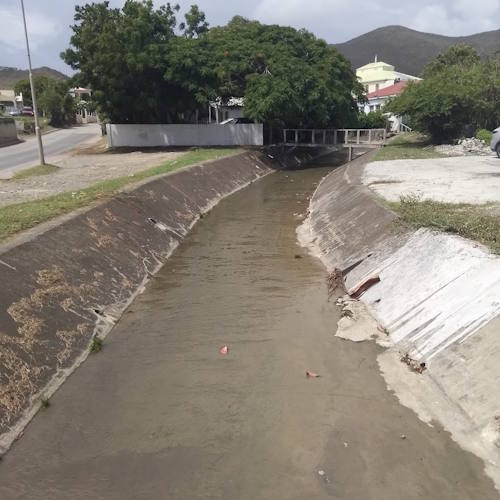 PHILIPSBURG: --- Serious questions are being raised about how cleaning work connected to the Ministry of Public Housing, Spatial Planning, Environment and Infrastructure (VROMI) is being assigned after workers complained that they were recruited informally, carried out the work and have still not been paid.
Information provided to SMN News indicates that a group of men was approached near a shop in Dutch Quarter by an individual who allegedly told them that he had government-related cleaning work available. The workers reportedly accepted the assignment believing that they would be paid after completing the job.
However, after carrying out the work, the men were reportedly told that their payment date had been pushed back until the following week.
The worker who spoke with SMN News could not provide clear information about the person or company holding the alleged contract. He said the person who recruited the group was known to him only informally and that the workers depended on that individual to obtain payment from the government.
That troubling account raises a basic but critical question: Who authorized the work?
If VROMI commissioned the work, the public deserves to know which company received the assignment, under which contract it was issued, the value of the work, and whether the individuals performing it were legally employed or formally subcontracted.
Workers do not know who holds the contract
According to the information received by SMN News, the workers were recruited without being shown a written agreement, employment contract, purchase order or other document confirming who was responsible for paying them.
The workers reportedly do not know whether the individual who hired them is the government contractor, a subcontractor, or merely an intermediary promising work on behalf of someone else.
They nevertheless completed the assigned duties expecting to be paid.
That is unacceptable.
Government-financed work cannot move through a chain of unidentified middlemen while the workers at the bottom are left chasing their wages. Public money must be traceable from the ministry that authorizes the work to the contractor receiving the payment and, ultimately, to the workers who performed the labor.
No New District-Cleaning Tender was in Place
The complaint comes against an already controversial background surrounding VROMI’s handling of public-cleaning contracts.
In March 2026, Member of Parliament Lyndon Lewis publicly raised concerns that the district-cleaning contracts were due to expire on March 31, 2026, while no new public tender was in place.
VROMI Minister Patrice Gumbs Jr. subsequently announced plans to restructure the district-cleaning contracts and improve the tendering process. However, the present complaint requires the ministry to disclose exactly how current cleaning assignments are being distributed and whether temporary arrangements are being used to bypass open competition.
The public must also be careful not to confuse district cleaning with VROMI’s separate trench-cleaning programme.
The government’s published record states that trench-cleaning contracts are worth slightly more than NAF. 2.8 million signed in August 2024 for 36 months, beginning September 1, 2024. Those contracts reportedly cover four zones and include maintaining trenches, drains, grills, and culverts. The ministry also said that those contracts emerged from a tender process conducted between 2022 and 2023, although that process had previously stalled because of concerns about its outcome.
Therefore, if the workers’ duties involved trench or drainage maintenance, VROMI must explain whether the work fell under one of those existing contracts. If it did, the ministry must identify the principal contractor and explain how the workers were recruited by someone whose full identity and contractual authority were apparently unknown to them.
If the work was instead part of district cleaning, post-weather cleanup, or another special assignment, VROMI must disclose the legal and financial basis on which it was awarded.
Was Work Subcontracted Without Protection for Laborers?
This situation cannot be dismissed as a private disagreement between workers and the person who hired them.
Once government work and taxpayers’ money are involved, VROMI has a responsibility to ensure that contractors do not collect public funds while leaving laborers unpaid. The ministry must also verify that everyone working on its projects is properly registered, insured, and protected under the country’s labor and tax laws.
The allegations raise several urgent questions:
- Which person or company received the cleaning assignment?
- Was there a signed contract, purchase order, or emergency work authorization?
- Was the assignment publicly tendered, awarded under an existing contract, or issued through a direct-award procedure?
- Did VROMI approve the use of subcontractors?
- How much money was allocated for the work?
- Has government already paid the principal contractor?
- How many workers were recruited, and what wages were they promised?
- Who will ensure that the workers are paid?
These are not complicated questions. The documentation should already exist if the work was legally and properly authorized.
Public Contracts Cannot Become Private Hustles
Sint Maarten cannot accept a system in which politically connected or unidentified individuals obtain government assignments, recruit vulnerable workers on the roadside or outside shops, and then leave those workers begging for payment.
Men who clean trenches, drains, roadsides and public spaces perform physically demanding work that protects communities from flooding and keeps the country functioning. They should not be treated as disposable labor.
Minister Gumbs must investigate the complaint and disclose whether the person who recruited these workers was acting for a recognized VROMI contractor.
If no authorized contract existed, the ministry must explain why individuals were apparently carrying out government-related work without proper documentation. If an authorized contractor was involved, that contractor must be held responsible for ensuring that every worker is paid.
Transparency cannot begin and end with announcing tenders. It must continue through the awarding of contracts, the approval of subcontractors, the execution of the work, and the payment of the people whose hands actually performed it.
Until VROMI provides those answers, the troubling question remains:
Who received the government work—and why are the workers who completed it still waiting for their money?