





October 10, 2026
People of Sint Maarten,
 Sixteen years ago, at midnight, the Netherlands Antilles ceased to exist, and Sint Maarten became an autonomous country within the Kingdom of the Netherlands. We remember October 10, 2010, as the day we became a country.
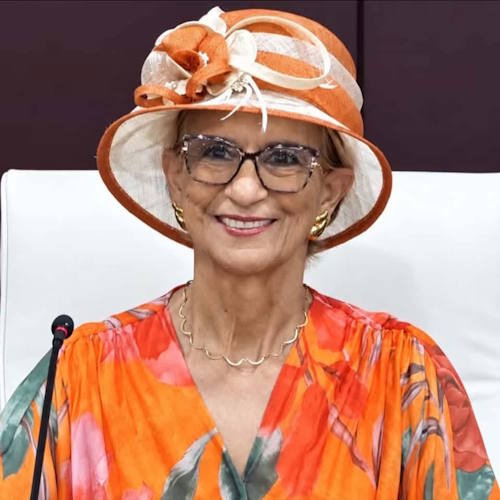
Today, I speak not only as President of Parliament, but also as someone who helped walk that road from the beginning. Let me share a few personal memories, reflect on what we have achieved, and ask some honest questions about our future.
The road to country status
Our journey began before 2010. It began with generations of people who believed that Sint Maarten should determine its own affairs.
In June 2000, our people gave that aspiration a clear democratic mandate. In a referendum, the majority chose separate status as a country within the Kingdom of the Netherlands.
Delivering on that mandate took ten years.
As Commissioner responsible for Constitutional Affairs, I led Sint Maarten through that process. We participated in round-table conferences in The Hague, Willemstad, and here at home. We negotiated agreements on debt relief, law enforcement, and financial supervision. Our Constitution went through many drafts before becoming law.
We negotiated with partners far larger than ourselves. We did not always secure everything we wanted, but we never forgot whose mandate we carried: yours.
I recognize everyone who contributed to that journey: the civil servants who wrote and rewrote proposals, Island Council members across party lines, legal advisers, and community voices who challenged us and held us accountable.
They were more than contributors to documents. They were builders of our country.
The first years
I remember the flag, the crowds, and the emotions of that historic night. I also remember the morning after, when the celebrations ended and the work began.
I had the honor of serving as Sint Maarten’s first Prime Minister. No one handed us an instruction manual. We had a Constitution, a Parliament, and a Council of Ministers. We had to turn that framework into a functioning country.
We transformed island departments into ministries. We established the High Councils of State: the Council of Advice, the General Audit Chamber, and the Ombudsman.
We established a Constitutional Court to safeguard fundamental rights through constitutional review of legislation. We also took our place in the Kingdom Council of Ministers, giving Sint Maarten its own voice in that forum.
We made mistakes. But accepting responsibility for our decisions is also part of self-government.
What autonomy has meant
Sixteen years later, we must ask: what has country status meant for Sint Maarten?
It has meant that we make decisions about our country here, through representatives you elect and can hold accountable. It has given us a voice within the Kingdom, throughout the region, and in our relationship with our neighbors in Saint Martin.
It has also given us institutions charged with scrutinizing government and demanding accountability.
However, our autonomy came with conditions. Debt relief came with financial supervision. The assistance we needed after COVID-19 came with country packages and terms that we did not determine alone.
A country of approximately 50,000 to 60,000 people must carry government responsibilities with a public service often stretched thin. Too often, relations within the Kingdom have felt more like an imposition than a partnership.
These challenges do not diminish the significance of October 10, 2010. They remind us that country status carries an enduring responsibility.
Our Constitution is a pact that requires us to exercise the right to govern ourselves responsibly.
Leaving the Kingdom: an informed decision
On an occasion such as this, we cannot avoid the question of independence.
I prefer to describe that choice plainly: leaving the Kingdom of the Netherlands.
Independence appeals to the heart. Leaving the Kingdom also requires careful thought, practical preparation, and an honest assessment of the consequences.
Sint Maarten’s country status is a constitutional status within the Kingdom. It is not the same as being an internationally sovereign state. The Kingdom is the sovereign state, while Sint Maarten is one of its four constituent countries.
We exercise autonomy in our domestic affairs, while the Kingdom retains responsibility for foreign relations and defense. We participate in certain international organizations through associate membership, but we do not hold our own seat at the United Nations.
The right to self-determination, including the option of independence, remains central to this discussion.
Too often, the debate focuses on one argument: leaving would free us from existing financial supervision and oversight from The Hague.
That is only one part of a much larger assessment.
Responsibilities currently carried at Kingdom level would become ours to organize and finance. We must therefore examine what we would gain, what we would lose, and what we would have to build.
What would diplomatic representation cost? What would maritime security and defense require? How would independence affect borrowing costs? What would changes to nationality and passports mean for our people’s daily lives and opportunities?
These questions require real figures and careful analysis.
I propose that we prepare a comprehensive national balance sheet, grounded in facts and open public discussion. Its purpose should be to give our people the information needed to choose freely, without pressure or fear.
If that assessment shows that remaining within the Kingdom is the wiser course, it should also clarify what we must demand from that partnership: equal treatment, a fair dispute mechanism, and respect for our existing autonomy.
The road to a referendum
An informed assessment must ultimately belong to the people.
Our country status was born from a referendum. Any fundamental change to that status, whether leaving the Kingdom or redefining our place within it, should likewise be decided by the people of Sint Maarten.
Yet sixteen years after October 10, 2010, we still lack the legislative framework Article 92 of our Constitution calls for, which provides that national ordinances regulate referendums.
That is why I have initiated the Referendum Ordinance.
Its purpose is to set clear rules on who may initiate a referendum, how questions are formulated, how voters receive information, and what effect the outcome has.
The steps ahead require commitment.
Parliament must consider and adopt the ordinance through the proper legislative process, including advice from the Council of Advice. We must prepare the factual assessment of our constitutional options. Any referendum question must be fair, supported by clear choices and neutral public information.
We must then present the people's decision to our Kingdom partners as a democratic mandate.
I call on colleagues across all parliamentary factions to treat this initiative as unfinished business from October 10, 2010.
The people gave us our status. They should hold the key to its future.
The work ahead
Other commitments also remain unfinished.
We must continue pursuing a fair Kingdom dispute mechanism. We must strengthen our public finances, invest in our people and public service, and protect the institutions that hold government accountable—especially when their findings are uncomfortable.
Above all, we must decide what kind of Sint Maarten we want to build.
We often say, “It takes all of us.” I have said it myself, and I believe it wholeheartedly.
But Government and Parliament must do more than repeat those words. We must bring people together, establish a clear direction, and lead by example.
When we ask for sacrifice, we must be prepared to make it ourselves. When we demand integrity, we must demonstrate it. When we ask for patience, we must honor our promises.
It takes all of us, but it starts with those entrusted to lead.
To our young people, who have known Sint Maarten only as a country: this country and its future belong to you.
You did not have to fight for this status, but you have a role in protecting and improving it.
Vote. Ask questions. Serve your community. Hold your leaders accountable, including me.
In 2000, our people chose to determine their own future. In 2010, we gave that choice constitutional form. Every day since, we have continued learning what self-government requires.
Let us celebrate with pride and open eyes. We became a constituent country within the framework of the Kingdom Charter. Our responsibility now is to make that status deliver for our people.
Happy Constitution Day, Sint Maarten.
God bless you, and God bless our beloved country.
President of Parliament Sarah Wescot Williams.