High-Level Diplomatic and Technical Delegation visits CARDI Headquarters to Strengthen Hemispheric Agricultural Alliances.

St. Augustine, Trinidad and Tobago:---  The Caribbean Agricultural Research and Development Institute (CARDI) today welcomed a distinguished international delegation to its Headquarters for a strategic courtesy call aimed at deepening agricultural innovation and regional food security.

The high-level delegation included Dr. Muhammad Ibrahim, Director General of the Inter-American Institute for Cooperation on Agriculture (IICA); Ms. Diana Francis, IICA Representative in Trinidad and Tobago; Mr. Cleber Soares, Deputy Minister of Agriculture and Livestock of the Ministry of Agriculture, Brazil; and Ms. Priscila Rech Moser, Agricultural Attaché at the Embassy of Brazil in Costa Rica.

The visiting officials met with CARDI’s leadership team, led by Executive Director Mr Ansari Hosein, along with Mr Fayaz Shah (Manager, Science, Technology and Innovation), Mr Tristan Alvarez (Manager, Planning and Resource Mobilization), and Mr Curtis Nero (Head, Finance Unit). Discussions centered on several ongoing regional projects and future avenues of technical cooperation between the Caribbean, IICA, and Brazil.

A key highlight of the visit was a special exhibition showcasing tangible outputs from the robust CARDI-IICA partnership. On display were high-yield black-eyed peas from recent pilot initiatives, commercial-grade soybeans and black beans produced in Belize, and multiple climate-resilient varieties of sweet potato.

Additionally, the Brazilian Deputy Minister was given a live demonstration of innovative digital tracking technology deployed by CARDI to detect the larvae of the South American Palm Weevil. This technology plays a critical role in mitigating the pest's spread, safeguarding the region's coconut and palm industries.

This courtesy call underscores a shared commitment to deploying cutting-edge agricultural science and cross-border partnerships to build a more sustainable and climate-resilient food system across the Americas and the Caribbean.
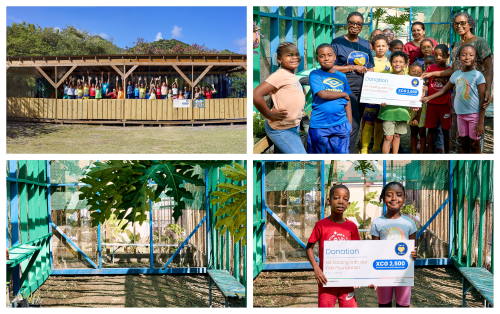

Orco Bank Stands With "No Kidding with Our Kids Foundation" to Strengthen Youth Programs in Sucker Garden.

nokiddingorco09062026PHILIPSBURG:--- Orco Bank Sint Maarten reaffirmed its commitment to the island's youth through its support of the No Kidding With Our Kids Foundation, as part of the bank's Orco Cares community impact program.
As one of its inaugural Orco Cares initiatives, Orco Bank mobilized its employees to work alongside the No Kidding With Our Kids Foundation in Sucker Garden, refurbishing an agricultural greenhouse used for youth education programs. The hands-on project gives local children a safer, better-equipped space to learn, grow, and connect with their environment.

The effort forms part of Orco Cares, the bank's permanent umbrella for year-round community engagement in Sint Maarten, rather than a one-time gesture. Through Orco Cares, Orco Bank commits to supporting the people and places that make the island home, with a particular focus on initiatives that uplift youth and strengthen community life.

"Supporting No Kidding With Our Kids Foundation is exactly what Orco Cares was created to do," said Mrs. Judy King, Country Manager of Orco Bank Sint Maarten. "When we invest our time and hands in a space where children thrive and grow, we are investing in the future of Sint Maarten. This is our home, and we believe a bank's value is measured not only in financial terms, but in the strength of the community it serves."

Orco Bank extends its appreciation to the No Kidding With Our Kids Foundation for its continued dedication to the youth of Sint Maarten and looks forward to deepening its community partnerships under the Orco Cares program in the months ahead.


UVI School of Agriculture to Host 58th Annual Caribbean Food Crop Society Conference.

More than 200 agriculturists representing 22 countries will converge on St. Croix, U.S. Virgin Islands, from July 12–17, 2026, for the 58th Annual Caribbean Food Crops Society (CFCS) Conference at the University of the Virgin Islands (UVI) Albert A. Sheen Campus.
“This conference highlights the importance of regional collaboration and innovation in strengthening food security across the Caribbean,” said Dr. Usman Adamu, director of the UVI School of Agriculture and chair of the local organizing committee. “UVI is honored to welcome agricultural leaders, researchers and practitioners to the Virgin Islands to share knowledge and advance solutions for sustainable agriculture.”
This year’s conference theme, “Increasing Food Security in the Caribbean through Innovative Agriculture,” will bring together researchers, farmers, extension professionals, educators, policymakers and agricultural stakeholders to explore innovative approaches to strengthening food systems across the Caribbean region.
The Caribbean Food Crops Society is an independent, nonprofit professional organization with an interdisciplinary membership dedicated to fostering communication among individuals and institutions advancing science, technology and food crop and livestock production throughout the Caribbean Basin. Founded in San Juan, Puerto Rico, on May 3, 1963, the organization has long played a critical role in supporting agricultural development and regional collaboration.
The U.S. Virgin Islands has been involved with CFCS since its inception, with St. Croix hosting the Society’s first annual meeting in 1963. The conference later returned to the Territory in 1974 and 1984, and subsequently every 10 years thereafter.
This year’s conference will feature oral and poster presentations, exhibits, a local farmers’ forum, and agricultural farm tours designed to encourage knowledge sharing and practical engagement with regional agricultural issues.
Conference registration fees are as follows: general registration – $350 per person (USD); local farmers – $150 per person (USD); and students – $100 per person (USD). Conference details, hotel accommodations, and registration information are available at www.uvi.edu/academics/school-of-agriculture/CFCS/.
The 2026 CFCS Conference is hosted by the University of the Virgin Islands School of Agriculture in partnership with the Virgin Islands Department of Agriculture, the Virgin Islands Department of Tourism, and the American Phytopathological Society–Caribbean Division.
“The week-long conference represents a strategically aligned opportunity to advance agricultural research, extension and regional collaboration consistent with the land-grant mission of the University of the Virgin Islands,” said Dr. Adamu. “It strengthens scientific and extension capacity, fosters partnerships among Caribbean agricultural institutions and promotes the application of research to improve agriculture and food production in the Virgin Islands and across the region.”
For more information, contact the UVI School of Agriculture at (340) 692-4090 or via email at This email address is being protected from spambots. You need JavaScript enabled to view it.. Members of the media are encouraged to contact the Office of Public Relations at (340) 693-1059 or via email at This email address is being protected from spambots. You need JavaScript enabled to view it. for media inquiries and interview requests.

Youth Vaccination Outreaches set for this Saturday and July 9. Check Your Child’s Vaccination Records.

PHILIPSBURG (DCOMM):---  The Collective Prevention Services (CPS), a department within the Ministry of Public Health, Social Development and Labor (VSA), through its Youth Health Care Baby Wellness Clinic, has planned several vaccine outreaches for members of the community for the months of June and July.

The vaccine outreaches are primarily geared towards children who have not yet received their vaccines. If parents have missed recent vaccine appointments, CPS encourages them to take advantage of this opportunity for children ages 2 months to 17 years.

Parents and guardians can bring their children and teenagers to the clinic at the Vineyard Office Park on Saturday, June 13, between 9:00 AM and 2:00 PM 7 and Thursday, July 9, from 4:00 PM to 7:00 PM. You should also bring along your child’s vaccination record.

The vaccines that are provided include: DTaP-IPV-Hib (Diphtheria, Tetanus, Pertussis, and Poliomyelitis and Haemophilus influenzae type B), Hepatitis B, PCV13 (Pneumococcus Conjugate Vaccine 13-valent), MMR (Measles, Mumps, and Rubella), DT-IPV (Diphtheria, Tetanus, and Poliomyelitis), and HPV (Human Papillomavirus).

For those who would like additional information to verify their child(ren’s) status or would like to make an appointment, you can call 721-542-3003 or message CPS via WhatsApp 721-520-4163.

Vaccination is essential in preventing a wide range of childhood diseases and significantly reduces the risk of illness, disability, and death.

These include conditions such as cervical cancer, diphtheria, hepatitis B, measles, mumps, pertussis (whooping cough), pneumonia, polio, rotavirus, diarrhea, rubella, and tetanus.

CPS also highlights the importance of the HPV vaccine, which is recommended for girls between the ages of nine and 17. This vaccine offers long-term protection against cervical cancer, one of the leading causes of death among women, making early vaccination a vital preventive measure.

Maintaining routine vaccination coverage is crucial. According to PAHO, gaps in vaccination can leave children vulnerable to preventable diseases such as polio, tetanus, measles, and diphtheria, particularly those with weakened immune systems. Ensuring full immunization not only protects individuals but also strengthens community immunity.

Vaccines remain one of the most effective tools in eliminating childhood diseases. CPS urges parents and guardians to treat vaccination records with the same importance as other essential documents, such as passports or identification, ensuring they are up to date and safely stored.

CPS Encourages Safe Food Handling Practices.

cps09062026PHILIPSBURG (DCOMM):---  The Collective Prevention Service (CPS), a department within the Ministry of Public Health, Social Development and Labor (VSA), joined the global community in observing World Food Safety Day 2026, celebrated annually on June 7, under the theme "From Burden to Solutions – Safe Food Everywhere."

This year's theme highlights the importance of understanding the burden of foodborne diseases through data, research, and surveillance, and using that information to develop focused, effective, and cost-efficient solutions that protect public health.

Every day, people around the world are affected by illnesses caused by unsafe food. Food contaminated by bacteria, viruses, parasites, toxins, or harmful chemicals can lead to a range of health problems, from mild gastrointestinal illness to severe disease, hospitalization, long-term health complications, and even death. The social and economic impacts of foodborne illnesses also place a significant burden on healthcare systems, businesses, families, and communities.

According to international health organizations, collecting and analyzing data on foodborne illnesses is essential for understanding where risks exist and for implementing measures that can prevent future outbreaks. Accurate information allows governments, health authorities, food producers, retailers, and consumers to make informed decisions that improve food safety across the entire food chain.

The theme "From Burden to Solutions – Safe Food Everywhere" reminds us that effective food safety measures begin with understanding the problem. By identifying the causes and sources of foodborne illnesses, public health authorities can develop targeted interventions that save lives, reduce healthcare costs, and improve the overall health and well-being of communities.

Food safety remains a shared responsibility. Everyone involved in the production, transportation, preparation, sale, and consumption of food has a role to play in ensuring that food is safe. From farmers and food manufacturers to restaurant operators, food vendors, supermarkets, and households, each step in the food chain contributes to preventing contamination and protecting public health.

CPS encourages residents to practice safe food handling measures at home by following these important food safety principles:

• Wash hands thoroughly with soap and water before preparing or consuming food;

• Clean food preparation surfaces, utensils, and kitchen equipment regularly;

• Separate raw foods from cooked foods to prevent cross-contamination;

• Cook foods thoroughly, especially meat, poultry, seafood, and eggs;

• Store perishable foods at safe temperatures and refrigerate promptly;

• Wash fruits and vegetables before consumption;

• Discard food that appears spoiled, has an unusual odor, or has exceeded its recommended storage period.

Food business operators are also encouraged to maintain strict food safety standards through proper employee hygiene, sanitation procedures, temperature monitoring, and adherence to food safety regulations and best practices.

The Collective Prevention Service encourages all residents to make food safety a daily priority and to remain informed about practices that reduce the risk of foodborne illnesses.


Subcategories